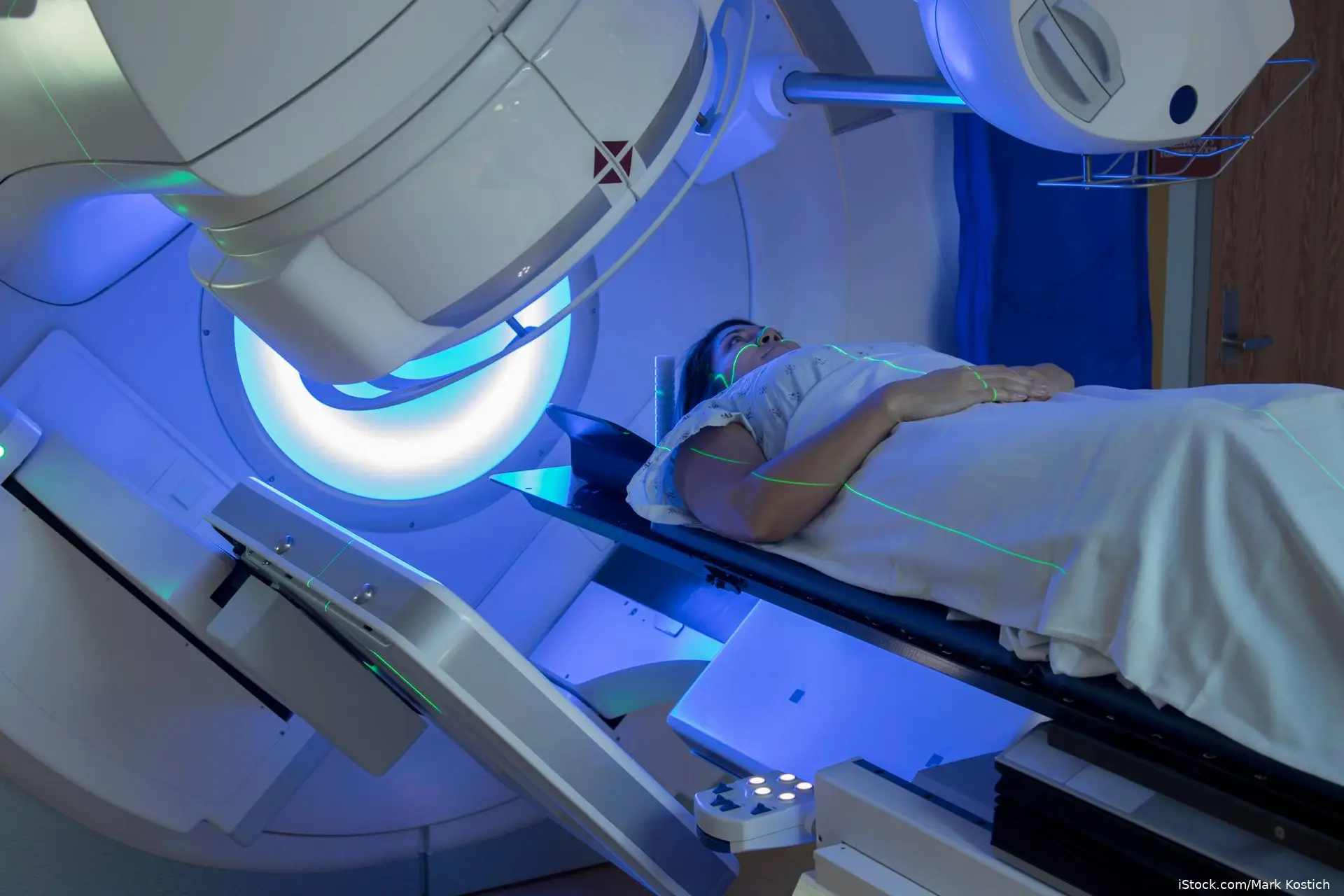
A 16-fraction hypofractionated radiotherapy (HypoRT) regimen was noninferior to conventionally fractionated radiotherapy (ConvRT) for locoregional recurrence (LRR) in women with high-risk, operable breast cancer receiving postmastectomy radiotherapy with internal mammary node irradiation, according to results of a phase 3 trial published in the Journal of Clinical Oncology.
The investigators noted that HypoRT is a well-established standard after breast-conserving surgery, but its adoption after mastectomy has remained cautious because of limited high-level evidence, particularly when the internal mammary nodes, which lie close to the heart and lungs, must be treated.
The open-label HypoMast-IMNI trial, conducted at Fudan University Shanghai Cancer Center, randomly assigned 1,494 women aged 18 to 70 years with high-risk disease after mastectomy and axillary lymph node dissection (ALND) to 42.56Gy in 16 fractions or 50Gy in 25 fractions, both targeting the chest wall and regional nodes. After a median follow-up of 58.1 months in the modified intention-to-treat population of 1,429 patients, the 5-year cumulative incidence of LRR was 1.7% with HypoRT and 2.2% with ConvRT (hazard ratio, 0.69; 95% CI, 0.32-1.51). The upper confidence limit fell below the prespecified noninferiority threshold (a hazard ratio of 1.61, corresponding to a 4% margin).
Distant metastasis-free, breast cancer recurrence-free, disease-free, and overall survival did not differ significantly between arms. Grade 3 acute skin toxicity occurred in 1.7% of the HypoRT group and 12.2% of the ConvRT group. Rates of grade 2 or higher radiation pneumonitis (2.0% and 2.1%, respectively) and pulmonary fibrosis (1.3% in each arm) were low and comparable, and no ischemic cardiac events or grade 4 toxicities were reported.
The final analysis was performed at the recommendation of the data and safety monitoring committee after event rates proved substantially lower than expected, which the authors noted reduced statistical power. Other limitations included the single-center design, the exclusion of patients who received neoadjuvant chemotherapy, universal ALND, and the need for longer follow-up to assess late toxicities, particularly cardiac effects.
Source: Wang X, Zhang X, Chen X, et al. Hypofractionated versus conventionally fractionated postmastectomy radiotherapy with internal mammary node irradiation for high-risk breast cancer (HypoMast-IMNI): a randomized phase III trial. J Clin Oncol. Published online October 19, 2026. doi:10.1200/JCO-25-02843

Advertisement
Today's Joke
Cartoon Slide Show


Quiz

Medical Trivia 10/30/2026
1 questions · ≈ 1 min
to compete in the ranking.
×
Loading