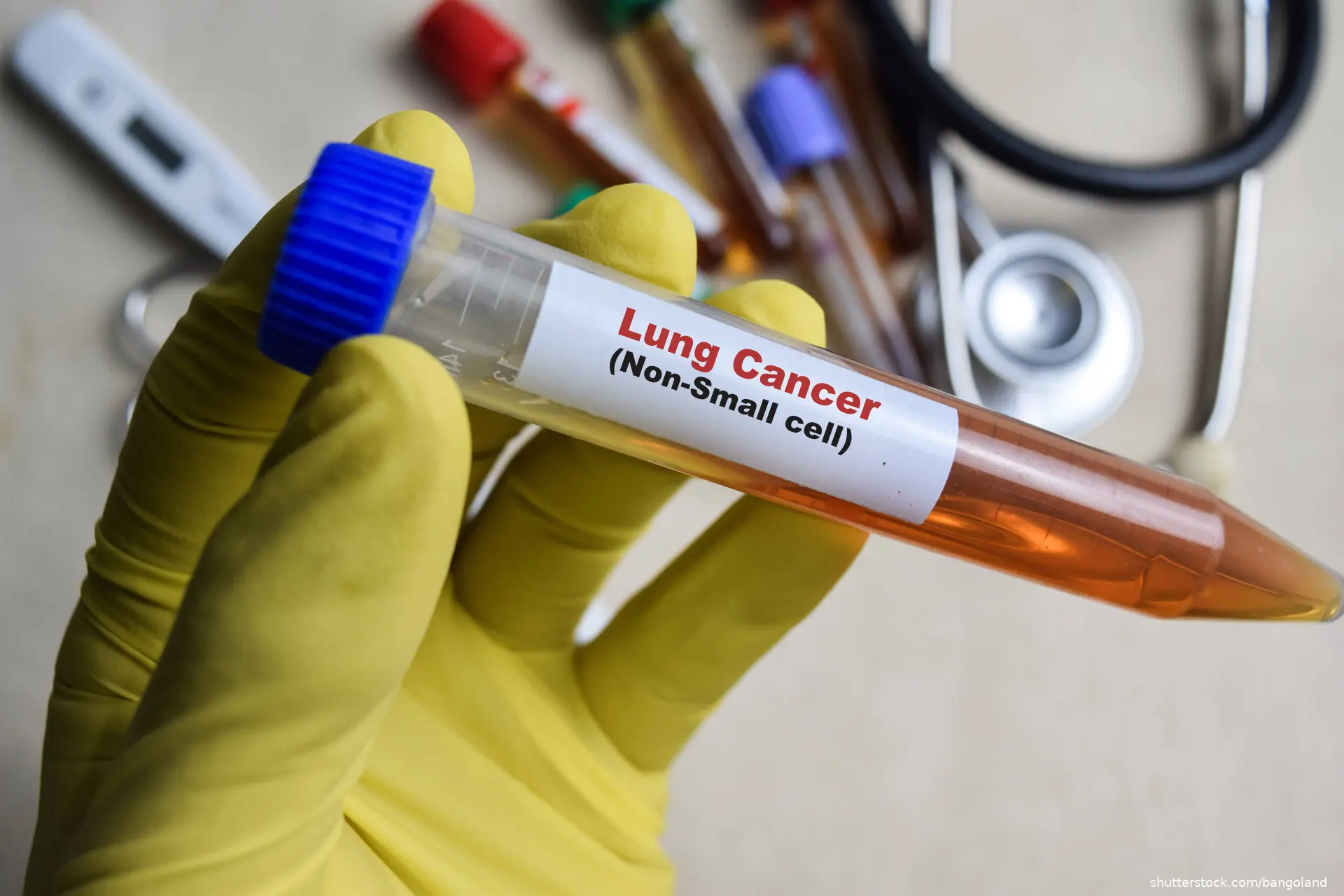
AstraZeneca reported that an updated exploratory analysis of the randomized phase 3 ADAURA trial showed a sustained overall survival (OS) benefit with adjuvant osimertinib (Tagrisso, AstraZeneca) versus placebo in patients with completely resected stage IB-IIIA epidermal growth factor receptor-mutated (EGFR-mutated) non-small cell lung cancer (NSCLC).
ADAURA enrolled 682 patients in a double-blind, placebo-controlled global trial. Participants received oral osimertinib 80mg once daily or placebo for 3 years or until disease recurrence after complete tumor resection; adjuvant chemotherapy was allowed at the physician’s and patient’s discretion. The primary endpoint was disease-free survival in stage II-IIIA disease, with OS assessed as a key secondary endpoint.
At 8 years, osimertinib was associated with a 47% lower risk of death than placebo in the primary stage II-IIIA population (hazard ratio [HR], 0.53; 95% CI, 0.38-0.75). Estimated OS was 74% with osimertinib and 58% with placebo. In the overall stage IB-IIIA population, the risk of death was 48% lower (HR, 0.52; 95% CI, 0.39-0.71), with estimated 8-year OS rates of 79% and 64%, respectively. The company reported an OS benefit across all predefined subgroups.
The analysis had a May 4, 2026, data cutoff. It included complete or partial extended survival data for approximately 77% of patients who were alive at the planned final OS analysis; 127 patients lacked additional survival data and remained censored, with survival times unchanged from the final planned analysis. Final safety data had been collected at the planned final OS analysis; AstraZeneca said safety and tolerability were consistent with the established profile, with no new safety concerns.
The results were presented at the IASLC 2026 World Conference on Lung Cancer and simultaneously published in the Journal of Thoracic Oncology. As an exploratory long-term analysis, the update provides additional survival follow-up beyond the trial’s planned final OS analysis.
Source: AstraZeneca. Tagrisso demonstrated unprecedented eight-year landmark survival in early-stage EGFR-mutated lung cancer in ADAURA Phase III trial. Press release. AstraZeneca; September 14, 2026. Accessed September 15, 2026.

Advertisement
Today's Joke
Cartoon Slide Show


Quiz

Medical Trivia 9/9/2026
1 questions · ≈ 1 min
to compete in the ranking.
×
Loading