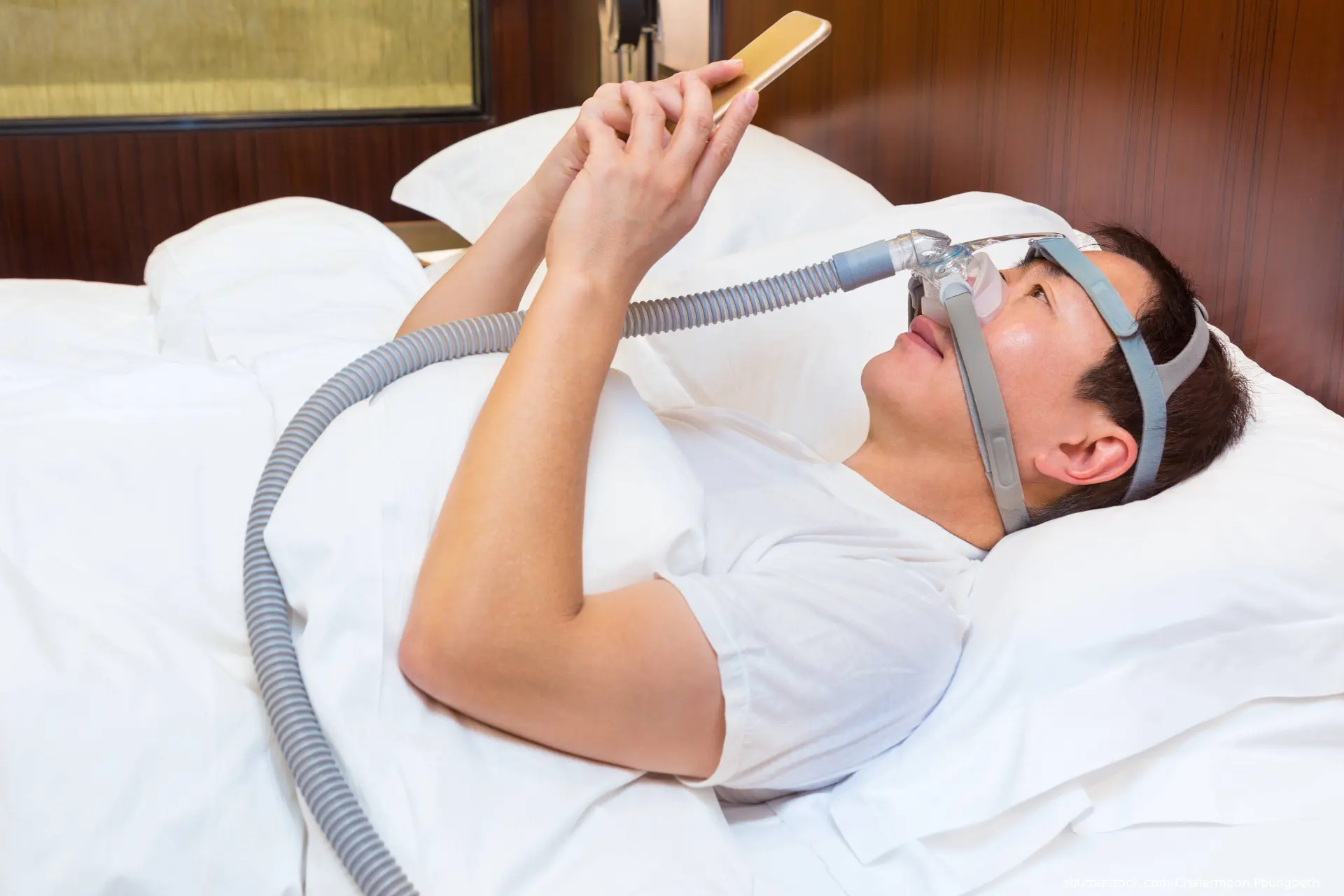
An investigational oral combination therapy improved objective measures of obstructive sleep apnea (OSA) in adults who had failed or refused positive airway pressure (PAP) therapy, according to findings from the phase 3 SynAIRgy trial published in the American Journal of Respiratory and Critical Care Medicine.
The randomized, double-blind, placebo-controlled trial evaluated aroxybutynin and atomoxetine (AD109), an investigational, once-daily-at-bedtime oral combination designed to increase upper-airway muscle tone during sleep. Participants received aroxybutynin 2.5mg/atomoxetine 37.5mg during a 1-week run-in, followed by aroxybutynin 2.5mg/atomoxetine 75mg for the remaining 25 weeks.
SynAIRgy randomized 646 adults with mild-to-severe OSA across 69 sites in the US and Canada. The primary intent-to-treat efficacy analysis included 615 participants. The primary endpoint was change from baseline to week 26 in apnea-hypopnea index (AHI). Key secondary endpoints included oxygen desaturation index (ODI), PROMIS-Fatigue T-score, hypoxic burden, PROMIS-Sleep Impairment T-score, and the proportion of participants with at least a 50% reduction in AHI.
At week 26, the estimated mean treatment difference in AHI was −4.0 events/hour with AD109 compared with placebo. This represented a model-estimated 44.1% reduction from baseline with AD109 versus 17.6% with placebo. AD109 also produced favorable changes in ODI and hypoxic burden, but the difference in PROMIS-Fatigue did not reach statistical significance in the intent-to-treat analysis.
The safety analysis included 644 participants. Adverse events occurred in 70.8% of participants receiving AD109 and 46.7% receiving placebo. Treatment discontinuation because of adverse events occurred in 21.2% and 3.1%, respectively. The most common adverse events with AD109 were dry mouth, insomnia, nausea, and urinary hesitation. No serious treatment-related adverse events were reported. The authors said AD109 may become a treatment option for patients unable to use PAP if approved, although they identified the high treatment-discontinuation rate and absence of dose reduction as trial limitations.
Source: Strollo PJ Jr, Farkas R, Taranto-Montemurro L, Cronin J, Patel SR; SynAIRgy Investigators. Aroxybutynin and atomoxetine (AD109) for obstructive sleep apnea: a randomized phase 3 trial (SynAIRgy). Am J Respir Crit Care Med. 2026;212(7):1569-1584. doi:10.1093/ajrccm/aamag215
Advertisement
Today's Joke
Cartoon Slide Show

Quiz

Medical Trivia 9/9/2026
1 questions · ≈ 1 min
to compete in the ranking.
×
Loading