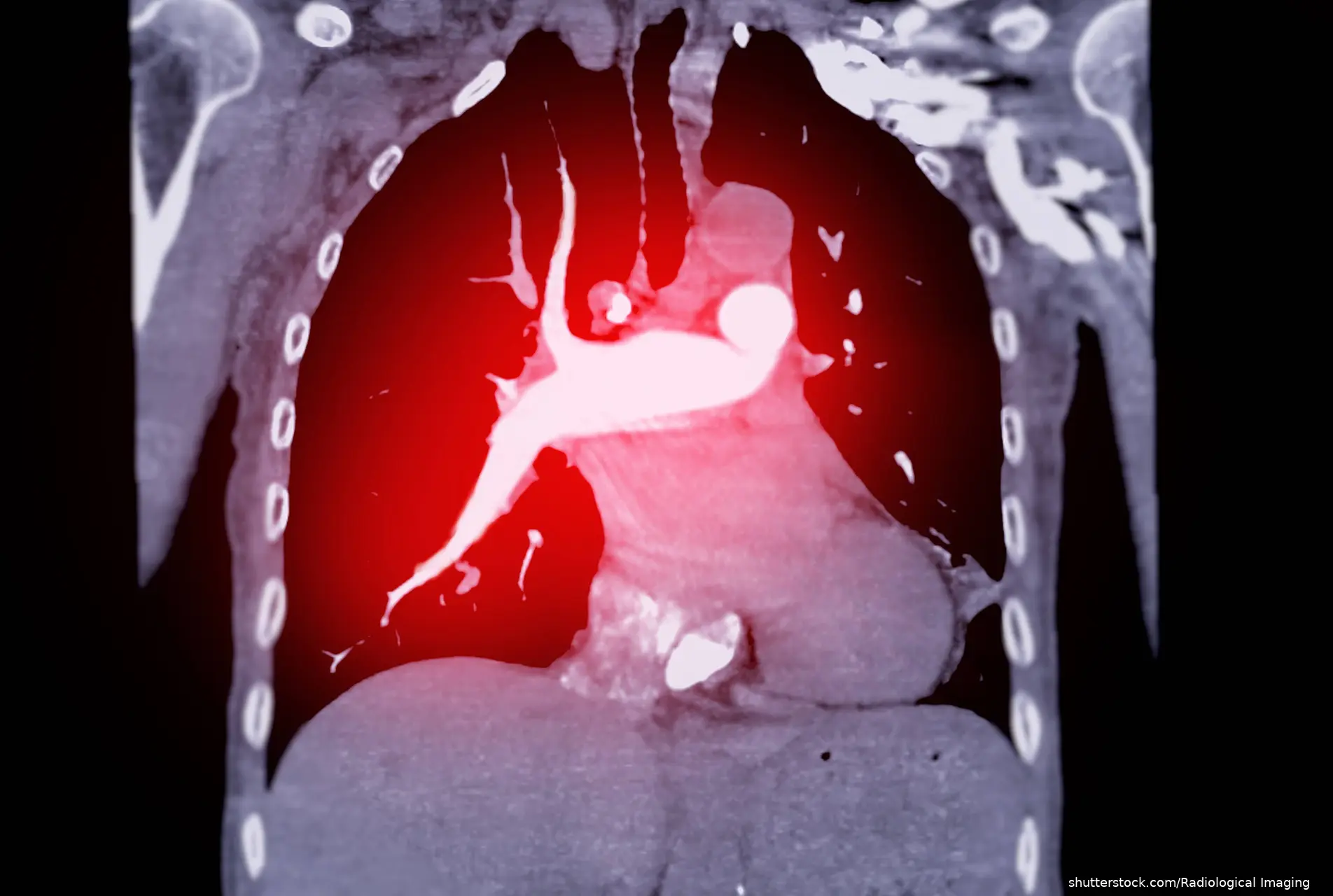
Catheter-directed thrombolysis reduced early clinical deterioration in patients with intermediate-high-risk acute pulmonary embolism compared with anticoagulation alone in the randomized PRAGUE-26 trial presented at the European Society of Cardiology Congress 2026.
The trial enrolled 558 patients at 11 centers in Czechia. Participants had acute intermediate-high-risk pulmonary embolism according to 2019 European Society of Cardiology criteria and were assigned to conventional catheter-directed thrombolysis or standard anticoagulation with intravenous unfractionated heparin or subcutaneous low-molecular-weight heparin. The catheter procedure delivered thrombolytic medication directly into the pulmonary artery clot without ultrasound facilitation.
Within 7 days, the primary composite endpoint of all-cause death, recurrent pulmonary embolism, or cardiorespiratory decompensation or collapse occurred in 0.7% of patients assigned to catheter-directed thrombolysis and 6.8% assigned to standard care. The relative risk was 0.10 (95% CI, 0.02-0.44; P<0.001), with the difference driven primarily by fewer episodes of cardiorespiratory decompensation or collapse. Echocardiography also showed earlier improvement in right ventricular strain with the catheter-based strategy.
Bleeding events through 7 days occurred in 4.6% of the catheter-directed group and 5.0% of the standard-care group (P=0.846). Two intracranial bleeding events occurred with catheter-directed treatment and none with standard care. There were 4 deaths in the standard-care group within 7 days and 1 death in the catheter-directed group within 30 days.
The investigators said they hoped the findings would help inform future European Society of Cardiology recommendations on the treatment of pulmonary embolism.
Source: European Society of Cardiology. Positive news for the treatment of pulmonary embolism. News release. European Society of Cardiology; August 31, 2026. Accessed September 1, 2026.
Advertisement
Today's Joke
Cartoon Slide Show
Quiz
Medical Trivia 9/9/2026
1 questions · ≈ 1 min
to compete in the ranking.
×
Loading