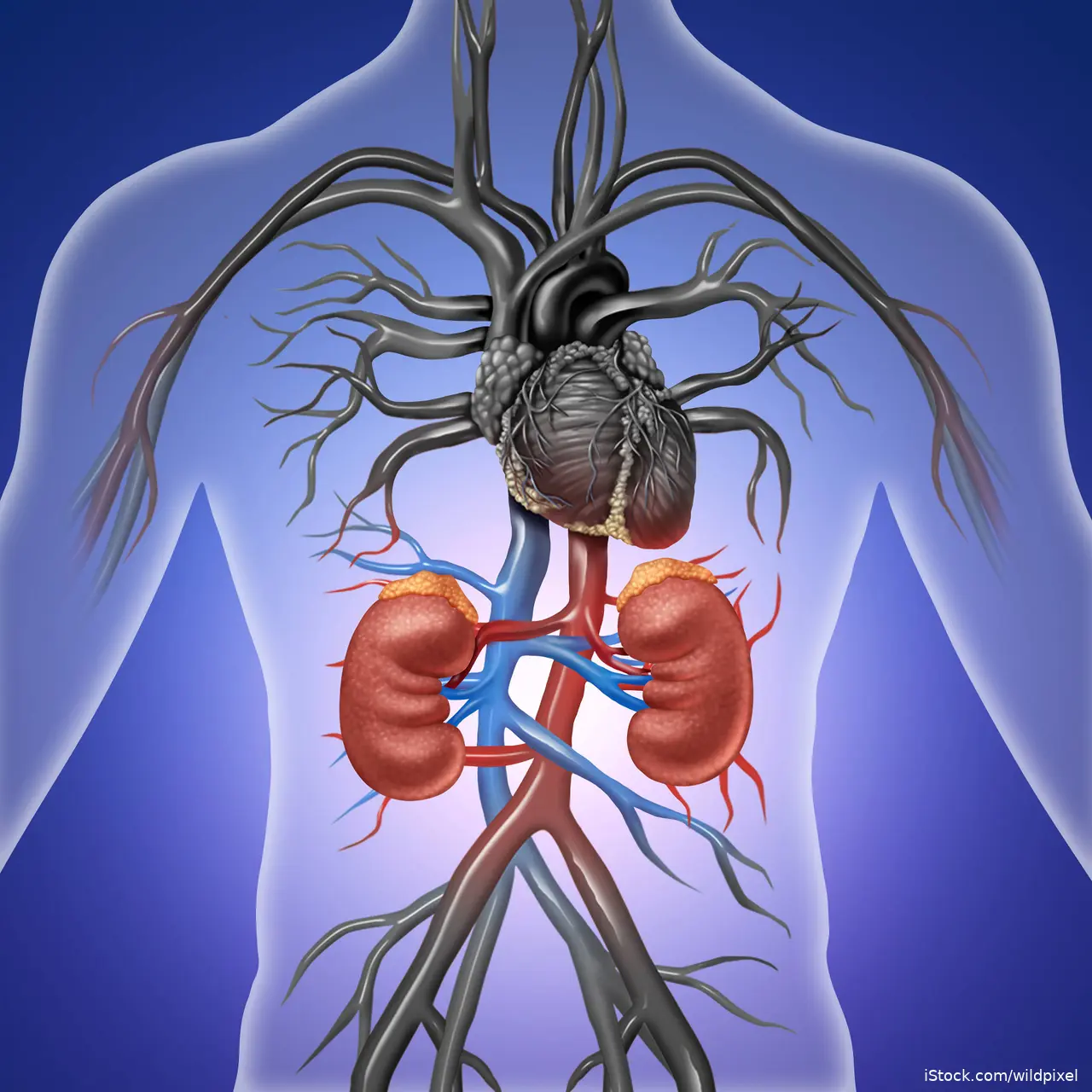
A population-based cohort study published in JAMA Network Open found that chronic kidney disease (CKD) severity was associated with worse outcomes after admission to the intensive care unit (ICU), including higher mortality, greater need for kidney replacement therapy (KRT), and longer hospital stays.
The study evaluated 531,090 adult residents of Ontario, Canada, who were admitted to an ICU between November 1, 2008, and February 28, 2021. Researchers classified CKD severity using baseline outpatient estimated glomerular filtration rate (eGFR) according to Kidney Disease Improving Global Outcomes criteria. Outcomes included ICU mortality, hospital mortality, 90-day mortality, KRT requirement during ICU stay, KRT dependence at 90 days, and ICU and hospital length of stay.
Among the adults included in the study, 25% had preexisting CKD. This included 12% with stage 3a CKD, 7% with stage 3b CKD, 3% with stage 4 CKD, 1% with non–dialysis-dependent stage 5 CKD, and 2% receiving maintenance dialysis. Compared with individuals without CKD, higher CKD severity was progressively associated with increased mortality risk up to non–dialysis-dependent stage 5 CKD.
The risk of requiring KRT in the ICU also increased with CKD severity. Compared with individuals without CKD, adjusted odds ratios for KRT initiation in the ICU were 1.79 for stage 3a CKD, 3.02 for stage 3b CKD, 6.71 for stage 4 CKD, and 32.00 for non–dialysis-dependent stage 5 CKD. Among patients who initiated KRT in the ICU and survived to 90 days, KRT dependence at day 90 increased from 7.2% among those without CKD to 83.8% among those with previously non–dialysis-dependent stage 5 CKD.
The authors concluded that CKD presence and severity were associated with adverse outcomes after ICU admission. They said the findings may help inform risk prognostication, goals-of-care discussions, resource allocation, and health policy initiatives for this large ICU population.
Source: El Wadia H, Beauregard N, Silver SA, et al. Severity of chronic kidney disease and outcomes after admission to the intensive care unit. JAMA Netw Open. 2026;9(6):e2620192. doi:10.1001/jamanetworkopen.2026.20192
Advertisement
Today's Joke
Cartoon Slide Show

Quiz
Medical Trivia 9/9/2026
1 questions · ≈ 1 min
to compete in the ranking.
×
Loading