CMR-Guided ICD Strategy Does Not Significantly Reduce Composite Arrhythmic Outcome
NewsAugust 31, 2026 at 12:52
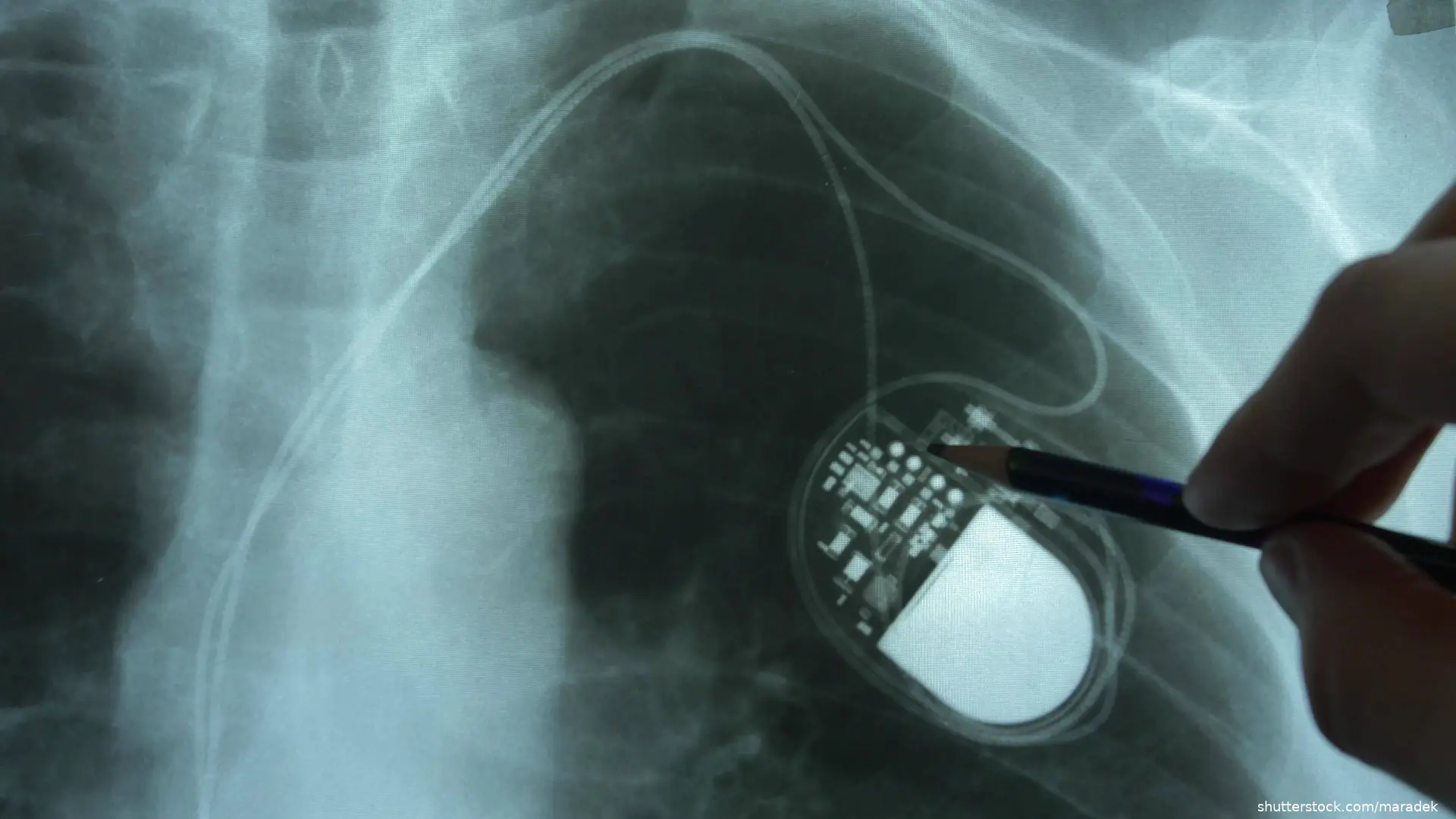
An implantable cardioverter-defibrillator (ICD) did not significantly reduce the composite of sudden cardiac death or hemodynamically significant ventricular arrhythmia in patients with mildly to moderately reduced left ventricular ejection fraction and myocardial scar, according to an open-label randomized clinical trial published online in JAMA.
The CMR GUIDE trial enrolled 353 adults with ischemic or nonischemic cardiomyopathy, a left ventricular ejection fraction of 36% to 50%, and scar identified by late gadolinium enhancement cardiovascular magnetic resonance. Participants receiving guideline-directed medical therapy at 18 sites in Australia, Germany, and the United Kingdom were assigned to receive a primary-prevention ICD or an implantable loop recorder.
During a median follow-up of 6.3 years, the primary composite outcome occurred in 14 of 180 patients assigned to an ICD and 16 of 173 assigned to a loop recorder, corresponding to event rates of 7.8% and 9.2%, respectively (hazard ratio, 0.76; 95% CI, 0.37-1.58). All-cause mortality, cardiovascular mortality, and heart failure-related hospitalization were similar between groups.
The individual components of the primary outcome moved in opposite directions. Sudden cardiac death occurred in 1.7% of the ICD group and 5.8% of the loop-recorder group, whereas hemodynamically significant ventricular arrhythmia occurred in 6.7% and 3.5%, respectively. In a prespecified subgroup analysis, the primary outcome occurred less frequently with ICD implantation among patients younger than 70 years, but not among those aged 70 years or older (P2=.01 for interaction). Given the small number of primary events, the subgroup finding should be interpreted cautiously.
The authors concluded that myocardial scar identified by cardiovascular magnetic resonance did not establish an overall benefit from ICD implantation among patients with an ejection fraction above the conventional 35% threshold. They noted that the lower-than-expected event rate limited the trial’s statistical power. The possible reduction in sudden cardiac death warrants further study, particularly among younger patients, the authors said.
Source: Selvanayagam JB, Cleland JGF, Hillis GS, et al. Cardiovascular magnetic resonance to guide defibrillator implantation for LVEF of 36% to 50%: the CMR GUIDE randomized clinical trial. JAMA. Published online August 28, 2026. doi:10.1001/jama.2026.17078
Advertisement
Today's Joke
Cartoon Slide Show

Quiz
Medical Trivia 9/9/2026
1 questions · ≈ 1 min
to compete in the ranking.
×
Loading