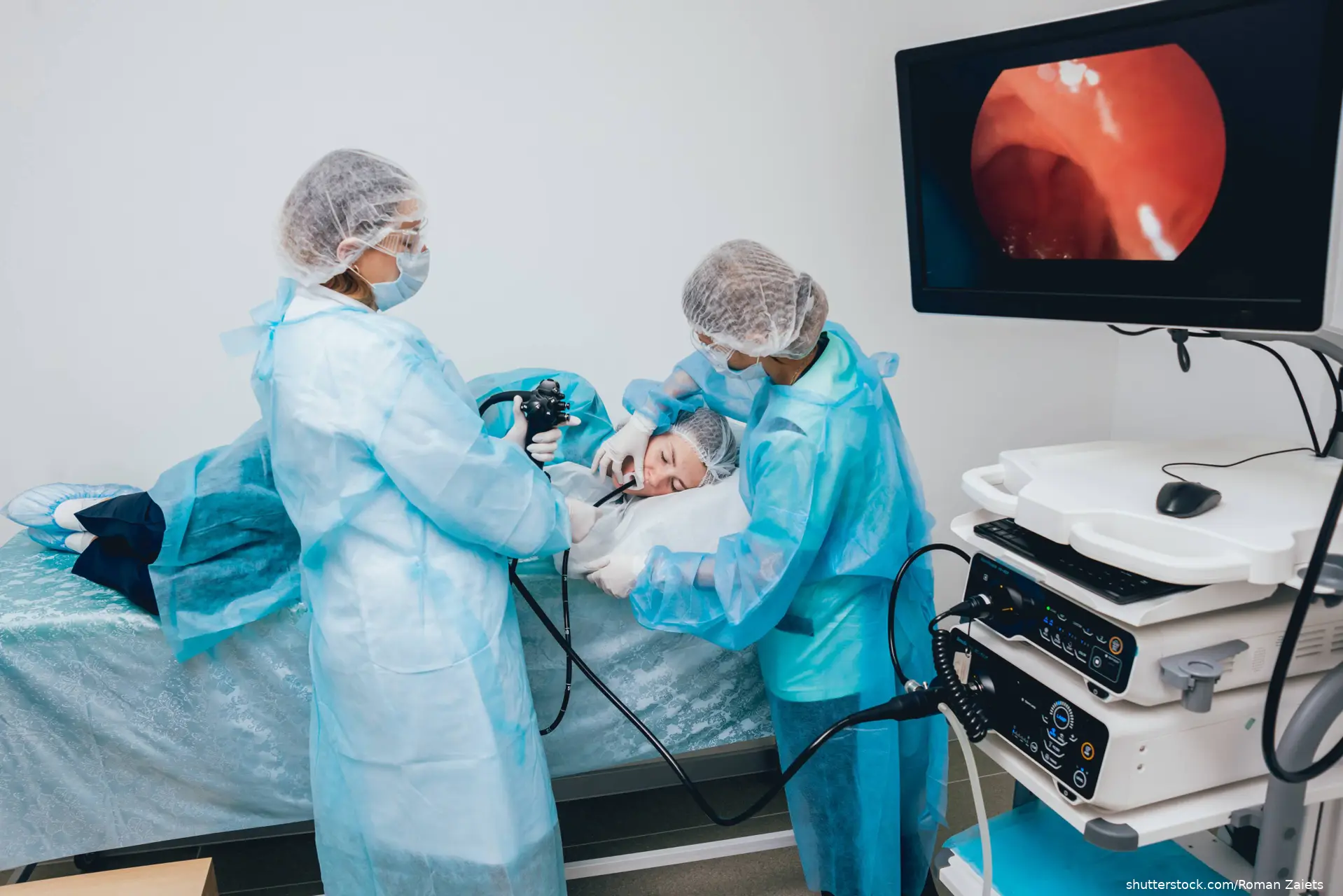
Adding durvalumab to perioperative FLOT (fluorouracil, leucovorin, oxaliplatin, and docetaxel) chemotherapy is the preferred option for locally advanced, resectable gastroesophageal adenocarcinoma (GOAC) where durvalumab is available, according to a European Society for Medical Oncology (ESMO) clinical practice guideline published in Annals of Oncology.
The guideline covers diagnosis, staging, treatment, and follow-up of esophageal squamous cell carcinoma (ESCC) and GOAC, which the authors defined as adenocarcinomas of the esophagus, esophagogastric junction, and stomach. It recommends testing adenocarcinomas for HER2, PD-L1, claudin 18.2, and microsatellite instability or mismatch repair deficiency to guide therapy.
In the phase 3 MATTERHORN trial, 948 patients with resectable GOAC were randomly assigned to perioperative FLOT plus durvalumab or placebo, followed by maintenance durvalumab or placebo. Durvalumab improved 2-year event-free survival (67.4% vs 58.5%; hazard ratio [HR], 0.71) and overall survival (HR, 0.78), with similar rates of grade 3 to 4 adverse events (71.6% vs 71.2%). The recommendation carries level of evidence I and grade A; FLOT alone is recommended as the standard chemotherapy-based approach.
For first-line treatment of HER2-positive advanced GOAC, the guideline recommends zanidatamab plus tislelizumab and chemotherapy where available. In the phase 3 HERIZON-GEA-01 trial, this triplet improved overall survival vs trastuzumab plus chemotherapy (HR, 0.72). The regimen is approved by the US Food and Drug Administration but not the European Medicines Agency; trastuzumab plus chemotherapy is recommended if zanidatamab is unavailable, contraindicated, or not tolerated. For locally advanced ESCC, the guideline recommends neoadjuvant chemoradiotherapy (CROSS regimen) and surgery, even after a complete clinical response, followed by adjuvant nivolumab for residual pathologic disease after R0 resection.
The authors said the recommendations are based on current evidence and their collective expert opinion, and that regulatory approval status reflects the time of writing. The guideline is a journal pre-proof that will undergo additional copy editing and review before final publication.
Source: Al-Batran SE, Bencivenga M, Crosby T, et al; ESMO Guidelines Committee. Gastric and oesophageal cancer: ESMO Clinical Practice Guideline for diagnosis, treatment and follow-up. Ann Oncol. Published online October 15, 2026. doi:10.1016/j.annonc.2026.09.015

Advertisement
Today's Joke
Cartoon Slide Show


Quiz

Medical Trivia 10/30/2026
1 questions · ≈ 1 min
to compete in the ranking.
×
Loading