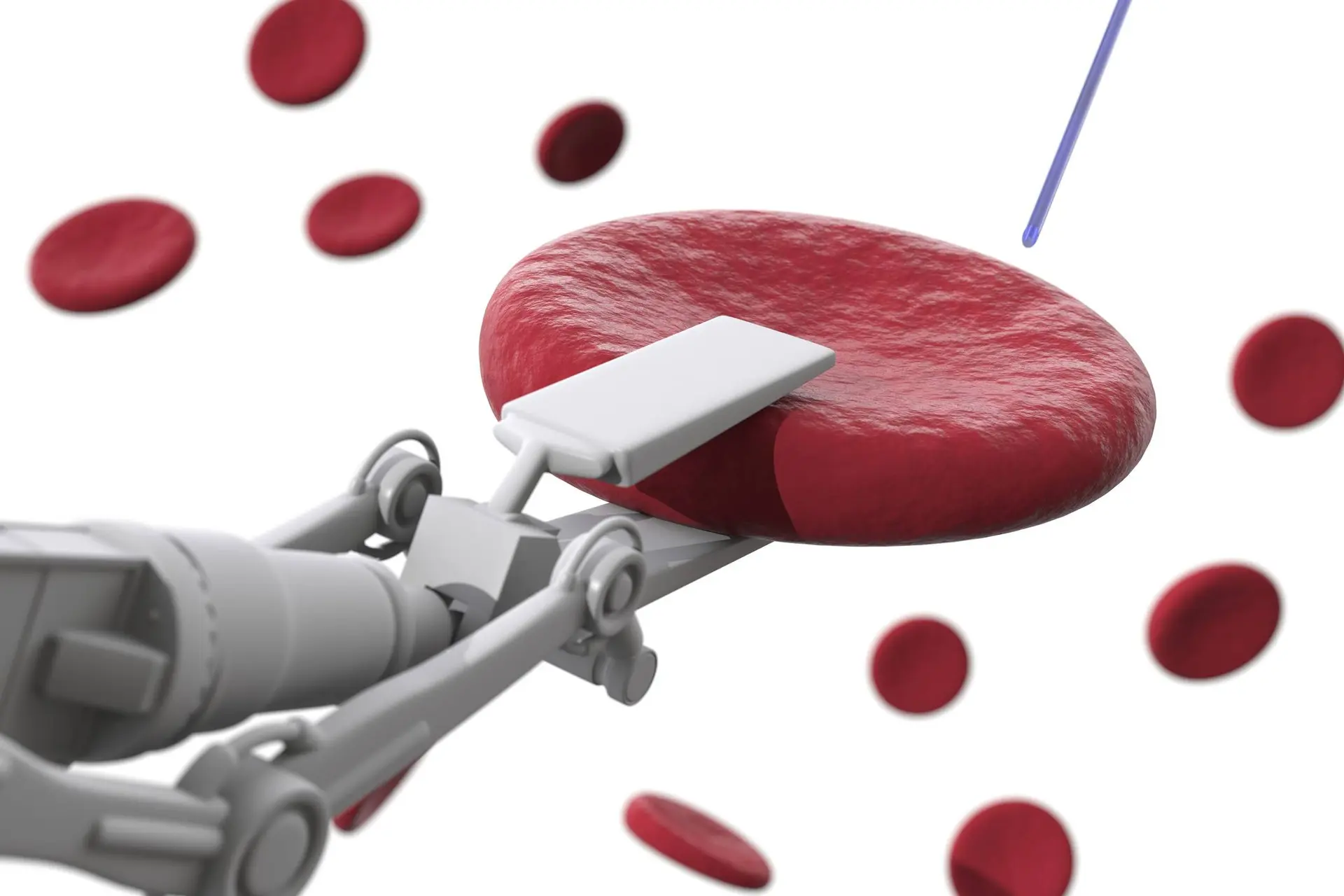
The FDA granted De Novo marketing authorization for the Aletta (Vitestro), the first standalone robotic device authorized to draw blood from an adult's arm without hands-on operator intervention. The device is intended for outpatient settings and must operate under the oversight of a supervisor trained in phlebotomy.
A trained phlebotomist initiates each session and remains available to respond to problems. The FDA said one phlebotomist may supervise as many as three Aletta devices simultaneously. The system guides arm positioning and uses near-infrared light and Doppler ultrasound to identify a suitable vein and distinguish it from arteries. If the system cannot identify an appropriate vein, it does not attempt a puncture.
After vein identification, the device applies a tourniquet, prepares the skin, inserts and disposes of the needle, changes collection tubes, and applies a bandage. The supervisor confirms tube order and adequate fill. Safety features include continuous skin disinfection during scanning, automatic needle detachment if the patient moves excessively, and sensors that can pause the procedure and alert the supervisor.
The FDA based the authorization on clinical data showing successful blood draw rates comparable to or better than trained human phlebotomists when the device proceeded with a needle stick. The evaluation included patients with different health conditions, skin tones, and self-reported difficult venous access. Device-related adverse events were uncommon and mild.
The De Novo pathway establishes special controls for labeling, performance testing, and clinical testing for this new low- to moderate-risk device type.
Source: US Food and Drug Administration. FDA authorizes first-of-its-kind robotic blood draw device. News release. Published August 19, 2026. Accessed August 20, 2026.
Advertisement
Today's Joke
Cartoon Slide Show


Quiz
Medical Trivia 9/9/2026
1 questions · ≈ 1 min
to compete in the ranking.
×
Loading