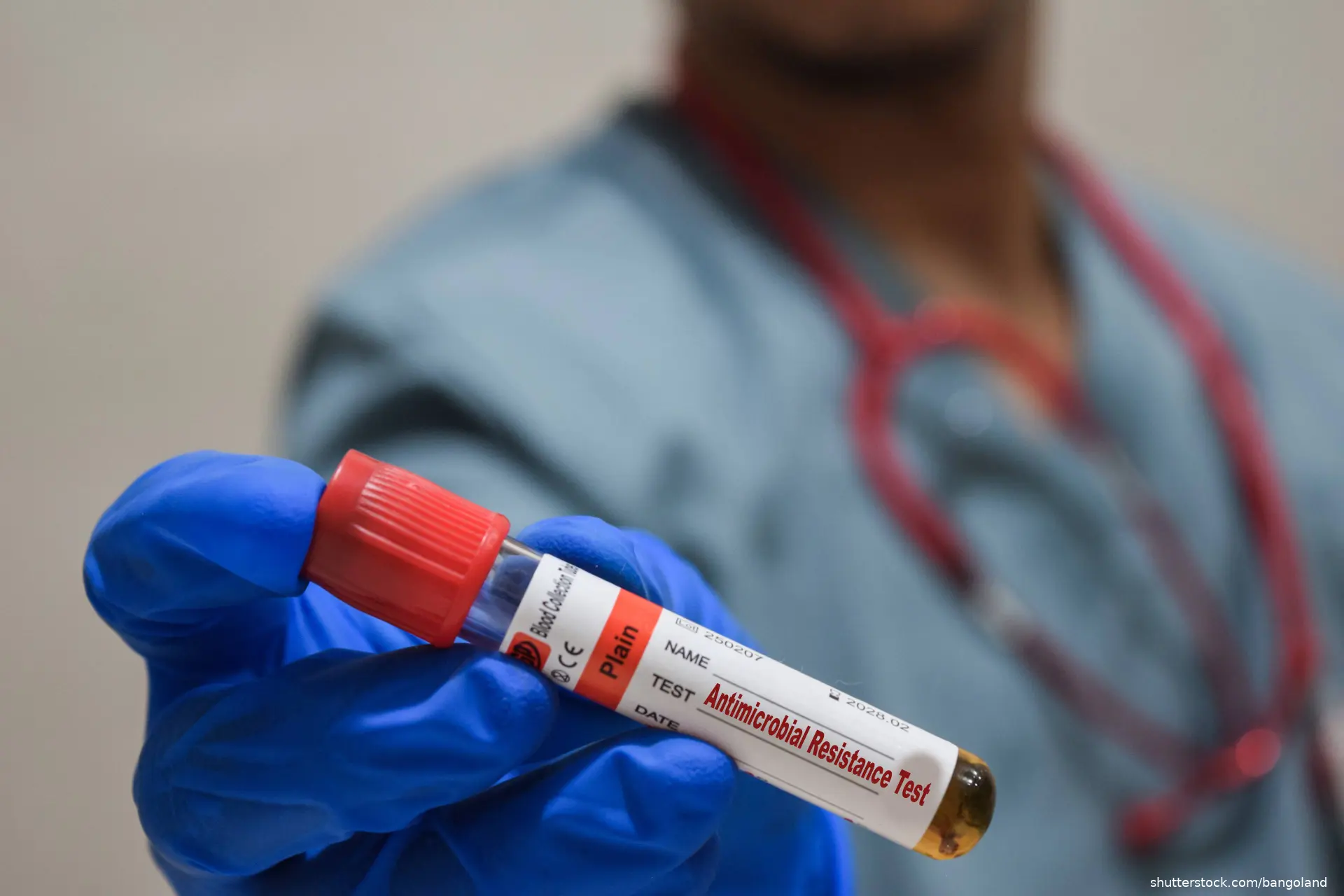
In a cross-country validation study published in PLOS Medicine, investigators reported that models built from routine clinical and demographic data had moderate ability to identify fluoroquinolone (FQ) resistance among patients with rifampicin-resistant tuberculosis (RR-TB), but performance varied across countries.
Investigators analyzed 5,175 patients with RR-TB and available FQ drug susceptibility testing (DST) results from eight countries between 2012 and 2024; 1,772 patients (34.2%) had FQ-resistant TB. They developed logistic regression, neural network, and XGBoost models and evaluated pooled, within-country, and cross-country strategies.
Pooled models achieved optimism-corrected areas under the receiver operating characteristic curve (AUROC) of 0.70 to 0.72 and areas under the precision-recall curve (AUPRC) of 0.57 to 0.59. Within-country models demonstrated slightly better discrimination, with AUROC and AUPRC reaching 0.8 in some countries; losses with externally trained models ranged from negligible to more than 0.1, depending on the country and algorithm.
Case-definition variables, particularly new TB and treatment failure, were the most consistently informative predictors across algorithms. In logistic regression analyses, treatment failure and other previously treated case definitions were associated with higher odds of FQ resistance, whereas new TB was generally associated with lower odds. Demographic, comorbidity, social-risk, education, and employment variables contributed less consistently across countries and algorithms.
The authors said prediction based on patient characteristics alone was context-dependent and models developed in one or several countries should not be assumed to generalize without rigorous external validation. They noted that relatively stable RR-TB and FQ-resistance patterns in the analytic dataset may limit applicability where multidrug-resistant TB dynamics are changing. The authors also said the models were not sufficiently accurate to replace DST and that the findings support locally adapted models and broader access to rapid testing.
Source: Shao T, Neves MR, Franke M, et al. Predicting resistance to fluoroquinolones among patients with rifampicin-resistant tuberculosis: a cross-country validation study. PLoS Med. 2026;23(9):e1004965. doi:10.1371/journal.pmed.1004965
Advertisement
Today's Joke
Cartoon Slide Show


Quiz
Medical Trivia 9/9/2026
1 questions · ≈ 1 min
to compete in the ranking.
×
Loading