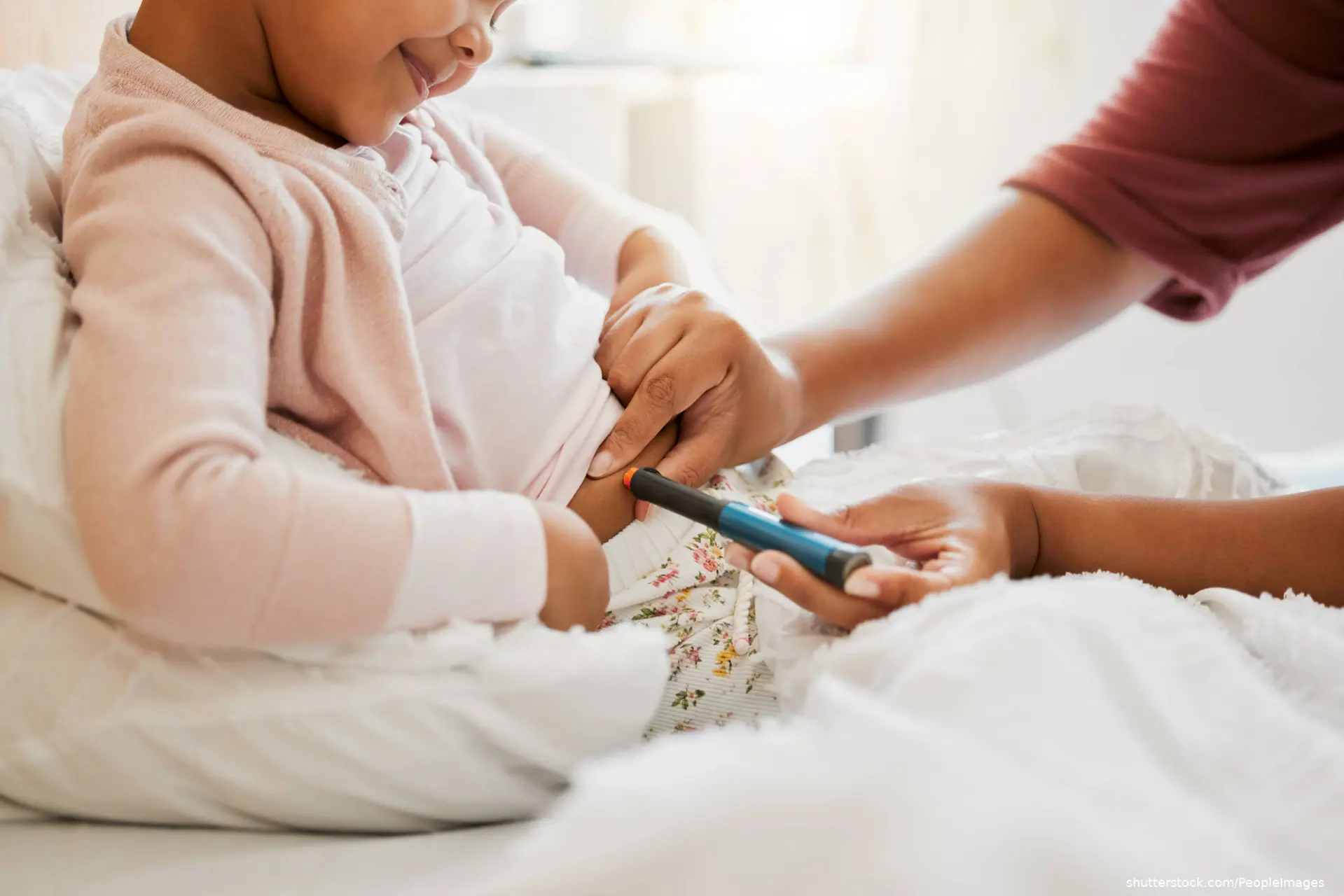
Prescribing of glucagon-like peptide-1 receptor agonists increased sharply among US children aged 8 to 11 years with obesity and without diabetes, according to a retrospective cross-sectional study published in Pediatrics.
Researchers analyzed electronic health record data for more than 3.5 million children. The study assessed prescriptions for Saxenda, Wegovy, and Zepbound among children aged 8 to 11, for whom clinical practice guidelines allow consideration of GLP-1 receptor agonists.
Across the full study period, 0.6% of children received a prescription. Prevalent prescribing rose from 0.03% in 2019 to 9.3% in 2026, a 310-fold increase. Eleven-year-olds had higher prescribing rates than 8-year-olds, 79.5 versus 41.5 per 10,000.
Rates were also higher among girls than boys, 75.9 versus 42.8 per 10,000, and among children living in areas with lower social vulnerability. Children with obesity-related comorbidities had a prescribing rate of 188.9 per 10,000.
The study describes prescribing patterns rather than treatment effectiveness or safety and reported no clinical outcomes. The findings identify rapid expansion of use in younger children and disparities that warrant further evaluation.
Sources: Orandi BJ, Patel SS, Messito MJ, et al. Trends in GLP-1 receptor agonist prescriptions for children ages 8 to 11 with obesity: 2019-2026. Pediatrics. Published online September 4, 2026. doi:10.1542/peds.2026-077048
NYU Langone Health. GLP-1 use among young children with obesity in US remains rare but is rising rapidly. News release. September 4, 2026. Accessed September 6, 2026.
Read also

Advertisement
Today's Joke
Cartoon Slide Show
Quiz
Medical Trivia 9/9/2026
1 questions · ≈ 1 min
to compete in the ranking.
×
Loading