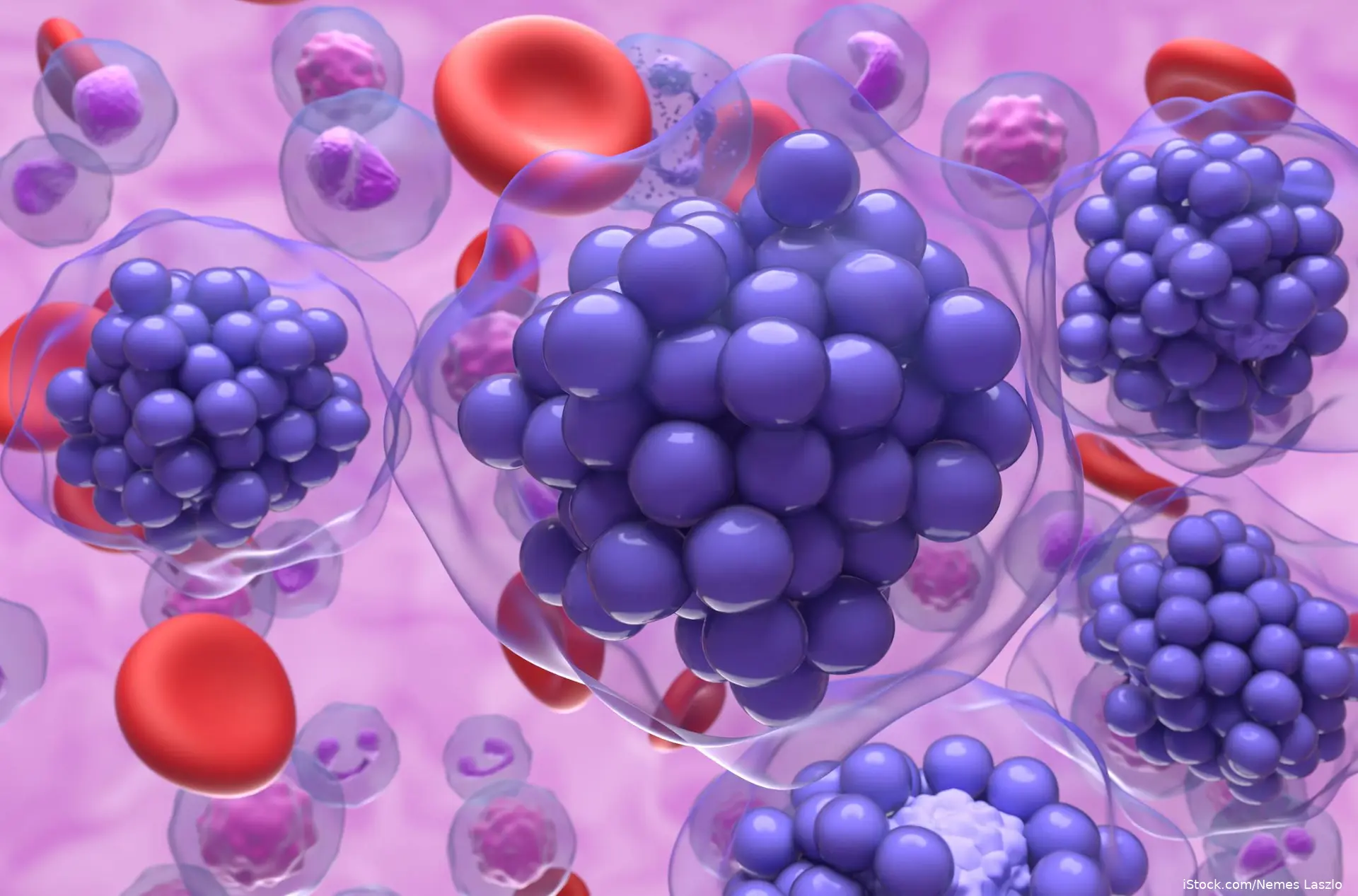
The MATRix/IELSG43 trial was reported in The Lancet. Investigators found that thiotepa-based high-dose chemotherapy followed by autologous stem-cell transplantation (HCT-ASCT) produced superior progression-free survival to nonmyeloablative R-DeVIC consolidation after uniform MATRix induction in patients with newly diagnosed primary CNS lymphoma (PCNSL).
The open-label, randomized phase 3 study was conducted at 56 hospitals with transplantation facilities in five European countries. Participants were untreated, immunocompetent patients with B-cell PCNSL. Patients aged 18–65 years were eligible regardless of Eastern Cooperative Oncology Group (ECOG) performance status. Those aged 66–70 years required ECOG performance status 0–2. Participants received four MATRix cycles comprising rituximab, high-dose cytarabine, thiotepa, and high-dose methotrexate. Patients reaching at least a partial response were randomized 1:1 to two cycles of R-DeVIC or HCT-ASCT.
Of 368 enrolled patients, 346 began induction and 230 patients were randomized. The full analysis set included 229 patients: 115 in the R-DeVIC group and 114 in the HCT-ASCT group. After a median follow-up of 45.3 months, the primary endpoint favored HCT-ASCT (hazard ratio, 0.43; 95% CI, 0.27–0.68; P=0.0003). Three-year progression-free survival was 78% with HCT-ASCT and 51% with R-DeVIC.
The mean number of adverse events per patient was higher with HCT-ASCT than with R-DeVIC, at 14.6 versus 9.3. Fatal serious adverse events after consolidation occurred in five HCT-ASCT recipients, including four infection- or infestation-related events and one pulmonary embolism. Two R-DeVIC recipients had fatal serious adverse events, both acute myeloid leukemia. All but the pulmonary embolism were judged possibly related to treatment.
The investigators concluded that HCT-ASCT improved progression-free and overall survival and was the preferred consolidation strategy for fit patients. The randomized comparison included only patients who completed induction and reached at least a partial response.
Source: Illerhaus G, Ferreri AJM, Wendler J, et al. High-dose chemotherapy followed by autologous stem-cell transplantation versus non-myeloablative consolidation in primary CNS lymphoma (MATRix/IELSG43): a randomised phase 3 trial. Lancet. 2026;408(10554):532-544. doi:10.1016/S0140-6736(26)00917-7
Advertisement
Today's Joke
Cartoon Slide Show

Quiz

Medical Trivia 9/9/2026
1 questions · ≈ 1 min
to compete in the ranking.
×
Loading