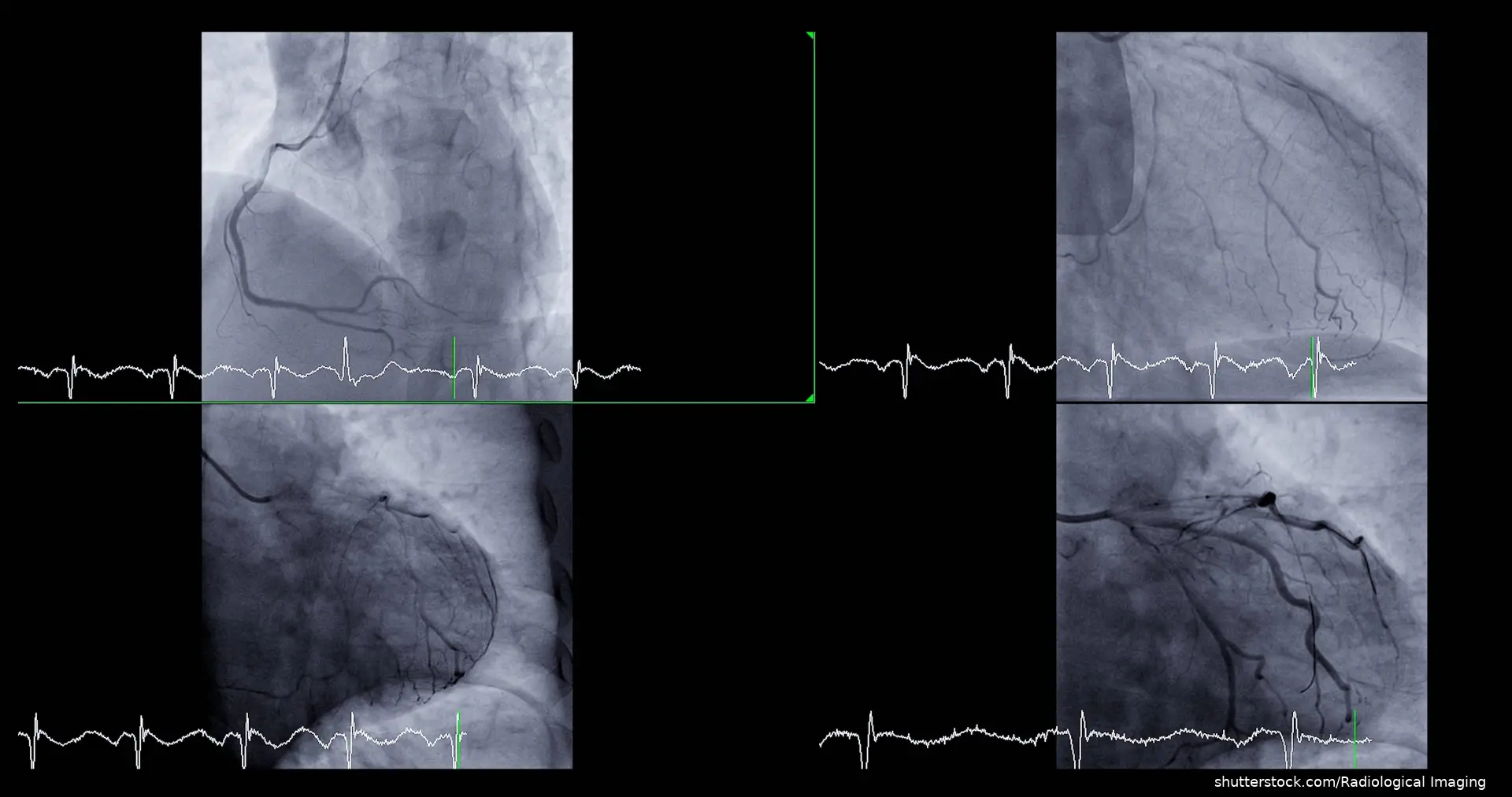
Routine immediate coronary angiography did not improve 30-day survival among unconscious adults resuscitated after out-of-hospital cardiac arrest without ST-segment elevation, according to the randomized DISCO trial and an individual patient data meta-analysis presented at ESC Congress 2026.
DISCO enrolled adults with witnessed out-of-hospital cardiac arrest, return of spontaneous circulation, and no ST-segment elevation on a prehospital or emergency department electrocardiogram. The 1,006 participants at 23 centers in Sweden, Denmark, and the Netherlands were randomly assigned in a 1:1 ratio to immediate angiography within 120 minutes or a deferred strategy in which angiography was intended to be delayed for at least 72 hours. Angiography before 72 hours was permitted for electrical or hemodynamic instability.
The primary endpoint of 30-day survival was 54.6% with immediate angiography and 53.6% with the deferred strategy (hazard ratio, 0.95; P=.67). Survival at 180 days also did not differ between the groups, and no significant differences were observed in secondary endpoints related to neurologic recovery.
Investigators also conducted an individual patient data meta-analysis of 5 randomized controlled trials, including DISCO, involving 2,173 patients. The pooled analysis likewise found no difference in 30-day survival between patients who underwent immediate angiography and those who did not.
Together, the findings support current guideline recommendations against routine immediate coronary angiography after out-of-hospital cardiac arrest without ST-segment elevation.
Source: European Society of Cardiology. Should patients with an out-of-hospital cardiac arrest and without an ECG ST-elevation receive immediate coronary angiography? News release. Published August 31, 2026. Accessed September 1, 2026.
Advertisement
Today's Joke
Cartoon Slide Show


Quiz
Medical Trivia 9/9/2026
1 questions · ≈ 1 min
to compete in the ranking.
×
Loading