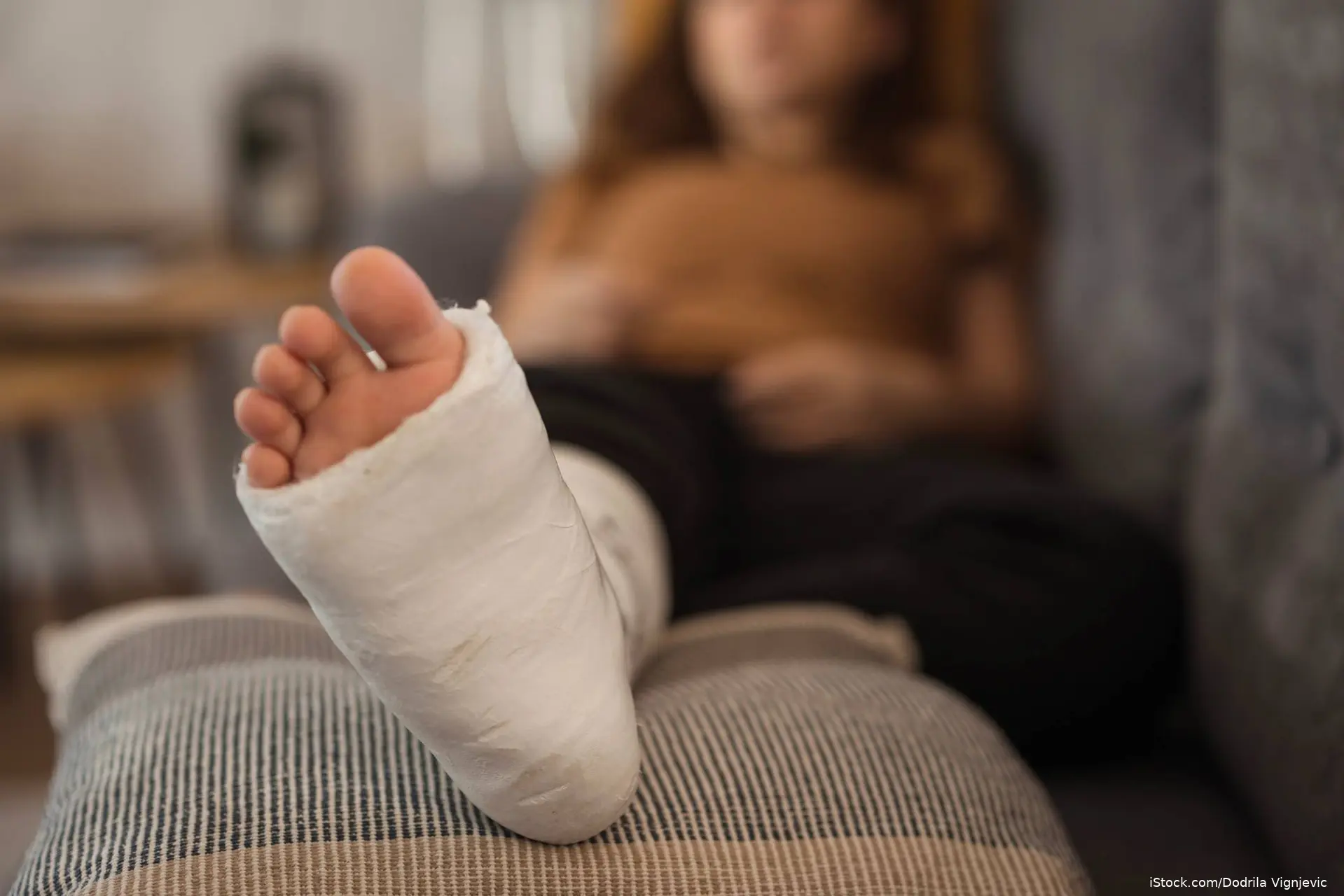
Adults with epilepsy receiving lacosamide monotherapy had a higher 5-year fracture risk than matched patients receiving levetiracetam monotherapy in a retrospective cohort study published in Neurology. The investigators noted that patients with epilepsy have an elevated fracture risk, while comparative skeletal safety data for newer antiseizure medications (ASMs) remain limited.
Investigators used the TriNetX Global Collaborative Network to identify adults with epilepsy initiating lacosamide or levetiracetam monotherapy. Patients receiving concomitant ASMs were excluded. Propensity score matching balanced the groups on demographics, comorbidities, and medications, leaving 20,888 patients in each cohort with balanced covariates. The primary outcome was a composite of hip, cervical vertebral, and forearm fractures, with hazard ratios estimated over 5 years.
Composite fracture occurred in 574 lacosamide-treated patients (2.86%) and 418 levetiracetam-treated patients (2.09%). Lacosamide was associated with a higher composite fracture risk compared with levetiracetam.
Elevated risk was also observed with lacosamide for forearm fracture, major osteoporotic fracture, and incident osteoporosis. A sensitivity analysis requiring at least 6 prescription fills and excluding additional newer-generation ASMs preserved the direction of the findings.
The authors classified the study as providing Class III evidence that lacosamide was associated with a higher 5-year fracture risk than levetiracetam among adults with epilepsy receiving monotherapy. They said the findings may inform ASM selection in patients with elevated skeletal fragility. The authors noted that residual confounding remained possible and that the retrospective design precluded causal conclusions.
Source: AbuAlrob MA, Al-Salahat A, Abdellatif R, Zammar K, Hussein A, Mesraoua B. Fracture risk with lacosamide vs levetiracetam monotherapy in adults with epilepsy. Neurology. 2026;107(3):e218269. doi:10.1212/WNL.0000000000218269
Advertisement
Today's Joke
Cartoon Slide Show
Quiz
Medical Trivia 9/9/2026
1 questions · ≈ 1 min
to compete in the ranking.
×
Loading