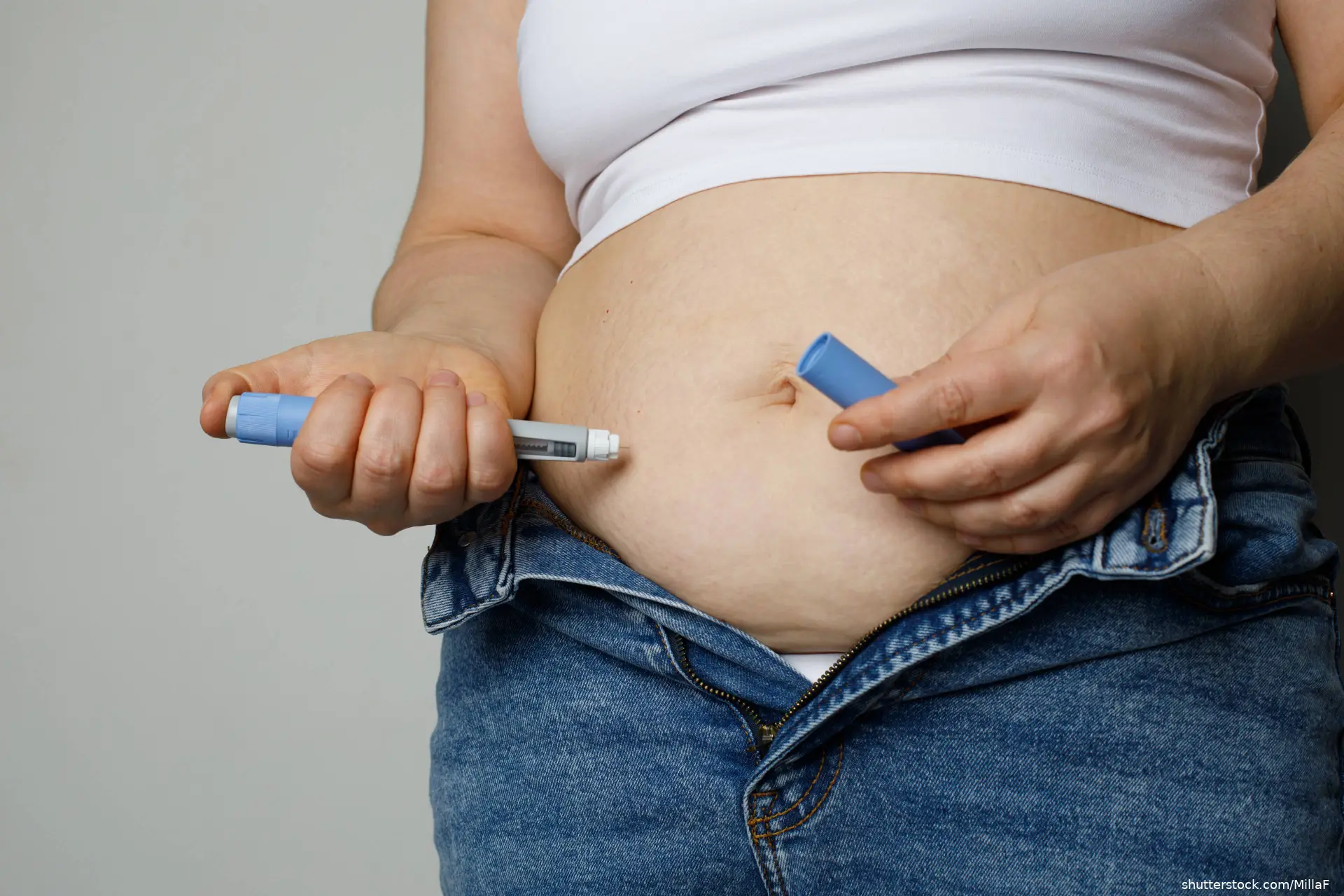
Retatrutide, an investigational once-weekly triple hormone receptor agonist, produced greater reductions in A1C and body weight than injectable semaglutide (Ozempic, Novo Nordisk) 2mg in adults with type 2 diabetes in the phase 3 TRANSCEND-T2D-2 trial, according to topline results announced October 28, 2026, by Eli Lilly.
The single molecule activates GIP, GLP-1, and glucagon receptors. Lilly said semaglutide 2mg was chosen as the comparator because it is the highest approved dose. Retatrutide has not been approved by the FDA or any other regulatory authority.
The randomized, open-label trial (NCT06260722) enrolled 1,298 adults with type 2 diabetes inadequately controlled with metformin, with or without an SGLT2 inhibitor, and a baseline A1C of 7.0% to 10.5%. Participants were randomized 2:2:1 to once-weekly retatrutide 9mg or 12mg or semaglutide 2mg. The primary objective was to show noninferiority of retatrutide 12mg to semaglutide in A1C reduction at 80 weeks. From an average baseline of 8.3%, A1C fell by 2.2 percentage points with both retatrutide doses vs 1.8 points with semaglutide. Mean body weight (baseline, 102.4kg) decreased by 19.5% and 20.9% with retatrutide 9mg and 12mg, respectively, vs 9.4% with semaglutide.
Lilly reported that superiority over semaglutide, with multiplicity control, was shown for retatrutide 12mg on A1C and for both doses on weight; for the 9mg dose, A1C superiority was nominally significant only, although noninferiority was met. The most common adverse events were gastrointestinal, including diarrhea (28.3% and 32.7% with retatrutide 9mg and 12mg vs 26.4% with semaglutide) and nausea (21.2% and 23.8% vs 21.3%). Dysesthesia occurred in 4.8% and 6.5% vs 2.7%, and adverse events led to discontinuation in 4.8% and 7.9% vs 2.7%.
The findings are topline results from a company announcement; Lilly said detailed results will be presented at a future medical meeting and published in a peer-reviewed journal. All reported data reflect the efficacy estimand, which assumes all participants remained on study treatment for 80 weeks without starting additional antihyperglycemic medication.
Source: Eli Lilly and Company. Lilly’s retatrutide delivered greater A1C reduction and more than double the weight loss of Ozempic’s highest approved dose in head-to-head trial. News release. Eli Lilly and Company; October 28, 2026. Accessed October 29, 2026.


Advertisement
Today's Joke
Cartoon Slide Show


Quiz

Medical Trivia 10/30/2026
1 questions · ≈ 1 min
to compete in the ranking.
×
Loading