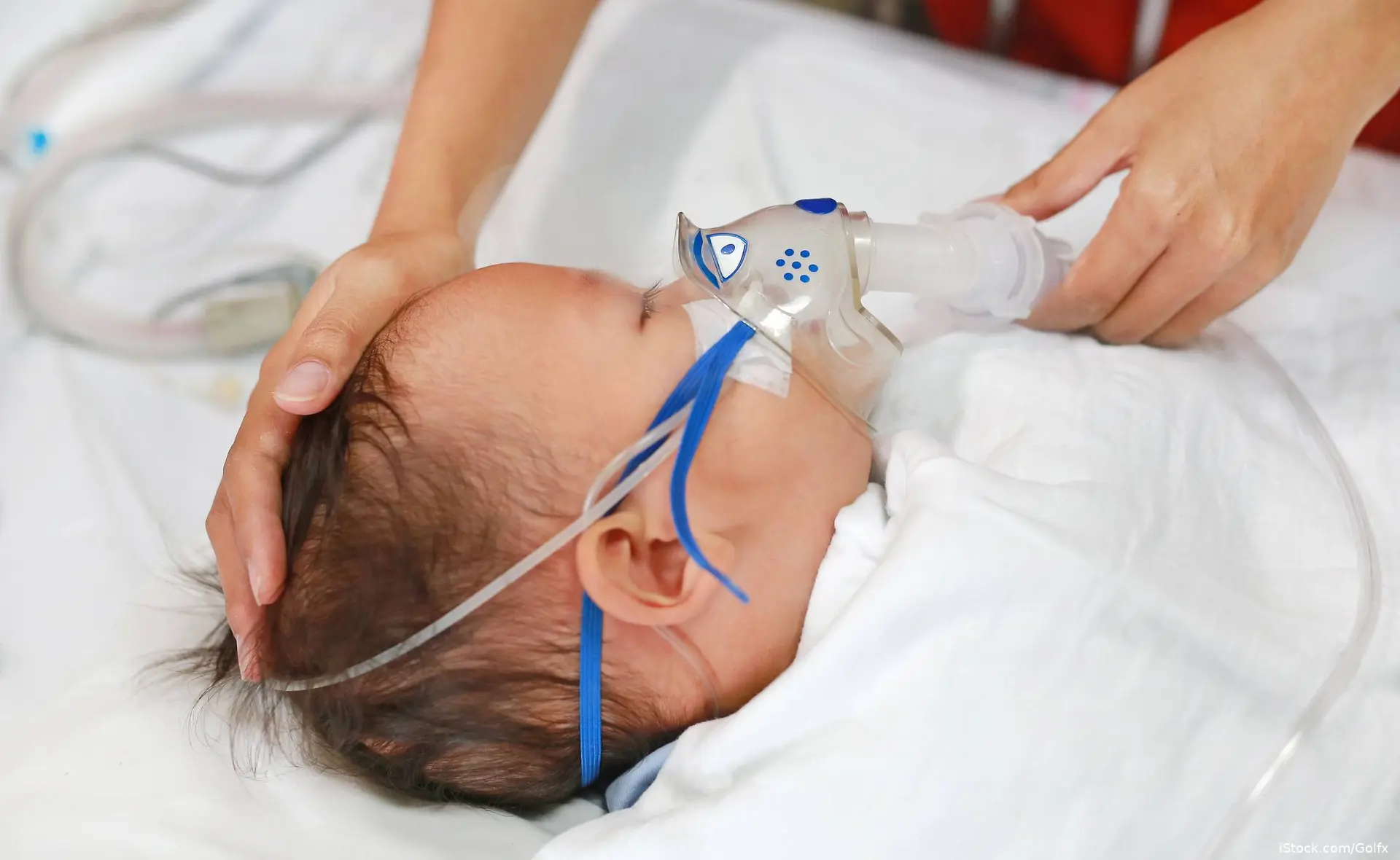
A cohort study using nationwide French data and published in JAMA Pediatrics found that nirsevimab (Beyfortus, Sanofi) immunization was associated with lower respiratory syncytial virus (RSV) lower respiratory tract infection (LRTI)–related hospitalization rates during infants’ first year of follow-up. The study found no protective association against RSV-LRTI hospitalization during the second year.
Investigators analyzed 2 matched cohorts in the French National Health Data System: 74,672 infants from the 2023 immunization campaign and 175,526 from the 2024 campaign. Infants who received nirsevimab were matched 1:1 with unimmunized infants. Both cohorts were followed for 1 year, and the 2023 cohort had an additional second year of follow-up.
Among 37,366 matched pairs in 2023, first-year RSV-LRTI hospitalizations occurred in 299 immunized infants (0.8%) and 899 unimmunized infants (2.4%). Among 87,763 pairs in 2024, the corresponding totals were 456 (0.5%) and 1,711 (1.9%). Estimated effectiveness was 66% in 2023 and 72% in 2024.
Nirsevimab exposure was associated with higher first-year hospitalization rates for ear, nose, and throat bacterial infections in both cohorts. During the second year, no protective association was observed for RSV-LRTI hospitalization. Higher rates of ear, nose, and throat infection–related hospitalization and asthma hospitalization were also observed.
The authors concluded that nirsevimab was associated with substantial reductions in RSV-LRTI hospitalization during the first year across the 2023-2024 and 2024-2025 seasons. It was not associated with reduced hospitalization for non-RSV infections or asthma or with protection during the second year.
Source: Gabet A, Kolla E, Tréluyer L, et al. First- and second-year outcomes after nirsevimab immunization. JAMA Pediatr. Published online August 10, 2026. doi:10.1001/jamapediatrics.2026.3384

Advertisement
Today's Joke
Cartoon Slide Show
Quiz
Medical Trivia 9/9/2026
1 questions · ≈ 1 min
to compete in the ranking.
×
Loading