Phase 3 Trials Support Upadacitinib for Alopecia Areata
NewsAugust 13, 2026 at 15:34
Updated at August 16, 2026 at 15:50
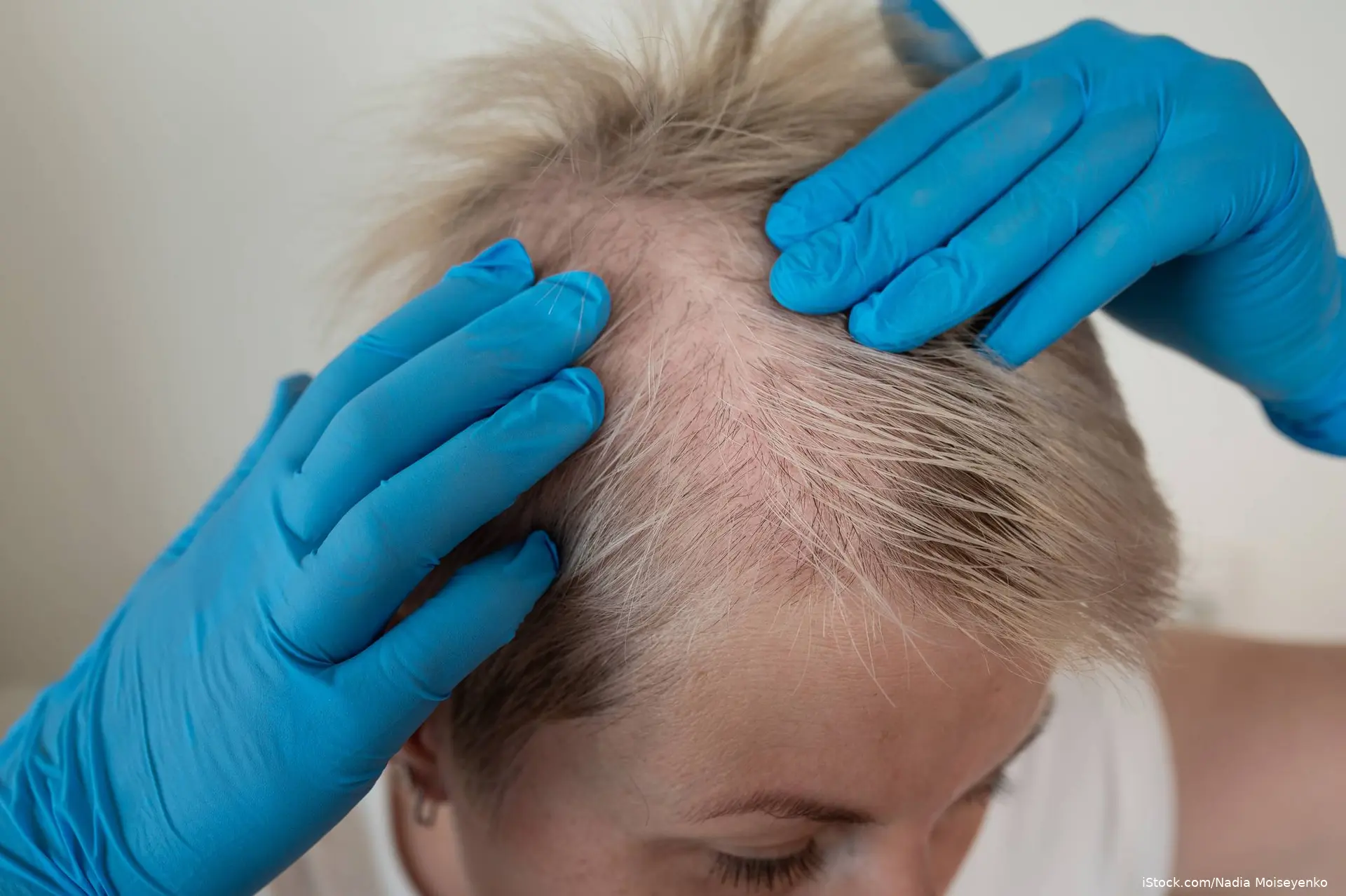
Upadacitinib was associated with significantly higher rates of at least 80% scalp hair coverage than placebo at week 24 in two phase 3 trials of adults and adolescents with severe alopecia areata. The findings were published in JAMA Dermatology.
The global, replicate UP-AA1 and UP-AA2 randomized clinical trials enrolled patients aged 12 to younger than 64 years with a Severity of Alopecia Tool (SALT) score of 50 or greater. During the 24-week, placebo-controlled, double-blind period, 1399 participants were randomized 2:2:1 to once-daily upadacitinib 15mg, upadacitinib 30mg, or matching placebo. The primary end point was a SALT score of 20 or less at week 24, corresponding to 20% or less scalp hair loss.
In UP-AA1, 45.2% of patients receiving upadacitinib 15mg and 55.0% receiving 30mg met the primary end point, compared with 1.5% receiving placebo. The corresponding rates in UP-AA2 were 44.6%, 54.3%, and 3.4%. Both doses were significantly better than placebo in both studies (P<.001 for all comparisons).
Treatment-emergent adverse events reported by more than 5% of patients in any group were upper respiratory tract infection, acne, elevated blood creatine phosphokinase, and nasopharyngitis. Treatment-emergent serious adverse events occurred in 1.6% of patients receiving 15mg, 2.3% receiving 30mg, and 0.4% receiving placebo across the trials. The investigators reported no new safety findings through week 24.
Limitations included the exclusion of patients with a current alopecia areata episode longer than 8 years, preadolescents, adults older than 64 years, and a study population that was more than 50% White. The investigators noted that longer follow-up through week 52 and beyond will further characterize efficacy and safety. They concluded that both doses were superior to placebo during the 24-week period and that upadacitinib may be an effective therapeutic option for the studied population.
Source: Mostaghimi A, Gooderham MJ, Lynde C, et al. Upadacitinib for severe alopecia areata in adults and adolescents: two phase 3 UP-AA randomized clinical trials. JAMA Dermatol. Published online August 12, 2026. doi:10.1001/jamadermatol.2026.2853
Advertisement
Today's Joke
Cartoon Slide Show

Quiz
Medical Trivia 9/9/2026
1 questions · ≈ 1 min
to compete in the ranking.
×
Loading