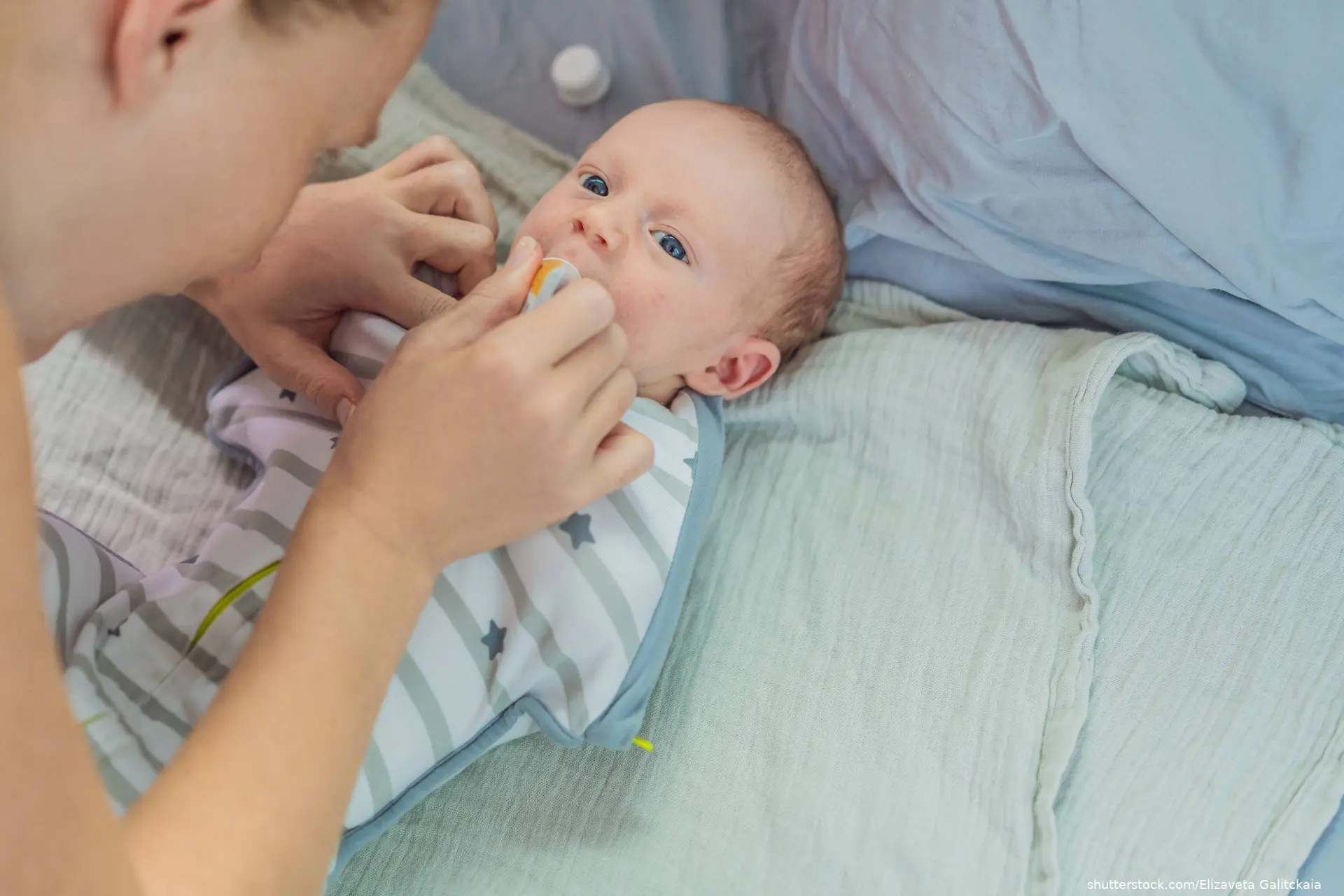
Routine use of a defined multistrain probiotic formulation was associated with a lower incidence of necrotizing enterocolitis (NEC) among very and extremely preterm infants treated at 2 neonatal intensive care units in the Netherlands, according to a study published in JAMA Network Open
The multicenter retrospective cohort included 1,413 infants born before 30 weeks of gestation, weighing less than 1,000g at birth, or meeting both criteria. Outcomes before probiotic implementation were compared with outcomes after the units adopted Bifidobacterium infantis Bb-02, Bifidobacterium lactis BB-12, and Streptococcus thermophilus TH-4 as part of enteral feeding.
NEC occurred in 11.9% of 598 infants before implementation and 5.3% of 815 infants afterward. After adjustment for gestational age, sex, birth-weight z score, 5-minute Apgar score, prenatal corticosteroid use, and preterm premature rupture of membranes, probiotic implementation was associated with a 51% lower risk of NEC (adjusted risk ratio, 0.49; P<.001). The number needed to treat was 15 (95% CI, 10-28).
All-cause mortality was similar between periods, but non–NEC-associated mortality significantly increased from 7.2% to 9.6% (adjusted risk ratio, 1.42; P=.04). One case of probiotic-associated sepsis was identified, although causality remained uncertain. Because the study compared periods before and after a practice change, residual confounding and other temporal changes cannot be excluded.
The findings provide evidence supporting the specific formulation studied, while the authors emphasized that probiotic effects may be strain-specific. They called for randomized trials to more precisely estimate the effectiveness and safety of specific probiotic strains in extremely preterm infants.
Source: Imren C, Jongejans V, Onland W, et al. Probiotic implementation and necrotizing enterocolitis risk in preterm infants. JAMA Netw Open. 2026;9(8):e2631601. doi:10.1001/jamanetworkopen.2026.31601
Advertisement
Today's Joke
Cartoon Slide Show

Quiz

Medical Trivia 9/9/2026
1 questions · ≈ 1 min
to compete in the ranking.
×
Loading