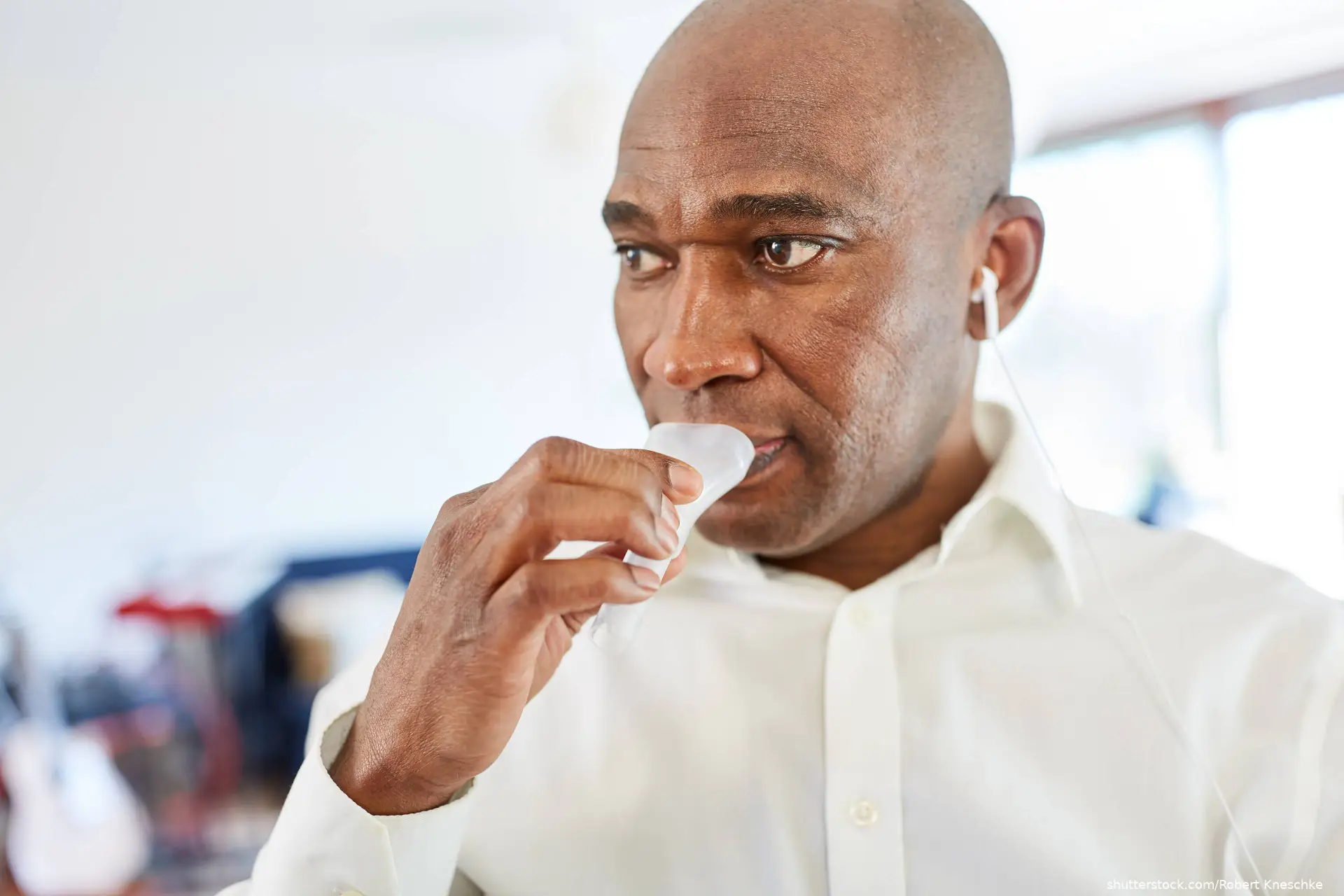
Baseline morning salivary cortisone identified adrenal insufficiency (AI) with accuracy similar to that of morning serum cortisol in a retrospective diagnostic accuracy study published as an accepted manuscript in the Journal of Clinical Endocrinology & Metabolism.
Current guidelines advocate morning serum cortisol for initial AI screening, but the approach requires an early-morning visit to a healthcare facility and venepuncture, the authors noted. Salivary glucocorticoids offer a non-invasive alternative with the potential for home-based sampling. Investigators at The Christie NHS Foundation Trust, a tertiary oncology and endocrinology center in Manchester, United Kingdom, analyzed consecutive adrenocorticotropin hormone (ACTH) stimulation tests performed in adults with suspected AI between January 2017 and January 2024.
The analysis included 517 ACTH stimulation tests in 449 participants, with AI confirmed in 104 tests (20.1%). Baseline salivary cortisone had an area under the receiver operating characteristic curve (AUC) of 0.93 (95% CI, 0.91-0.95), not significantly different from baseline serum cortisol (AUC, 0.93; P = .67) and higher than baseline salivary cortisol (AUC, 0.87; P < .001).
A rule-out threshold of ≥703 ng/dL (19.5 nmol/L) had a sensitivity of 0.97 and specificity of 0.59, while a rule-in threshold of <180 ng/dL (5.0 nmol/L) had a sensitivity of 0.58 and specificity of 0.97. According to the investigators, these thresholds provided the highest net benefit in decision curve analysis. An intermediate threshold of <389 ng/dL (10.8 nmol/L) identified patients for whom the authors said glucocorticoid cover should be considered while awaiting confirmatory testing. Applying the thresholds would have reduced the need for confirmatory ACTH stimulation testing to 38.7% of cases, the investigators reported.
The authors concluded that baseline morning salivary cortisone performs at least as well as serum cortisol for AI screening. They cited limitations including the retrospective single-center design, overrepresentation of oncology patients, limited availability of centers able to perform mass spectrometry assays, and derivation and evaluation of the thresholds in the same cohort, which may yield optimistic apparent performance. Prospective external validation is required, they wrote.
Source: Televantos C, Monaghan PJ, Michaelidou M, et al. Diagnostic accuracy study of morning salivary cortisone for screening adrenal insufficiency in a real-world cohort. J Clin Endocrinol Metab. Published online September 29, 2026. doi:10.1210/clinem/dgag401
Advertisement
Today's Joke
Cartoon Slide Show


Quiz

Medical Trivia 10/30/2026
1 questions · ≈ 1 min
to compete in the ranking.
×
Loading