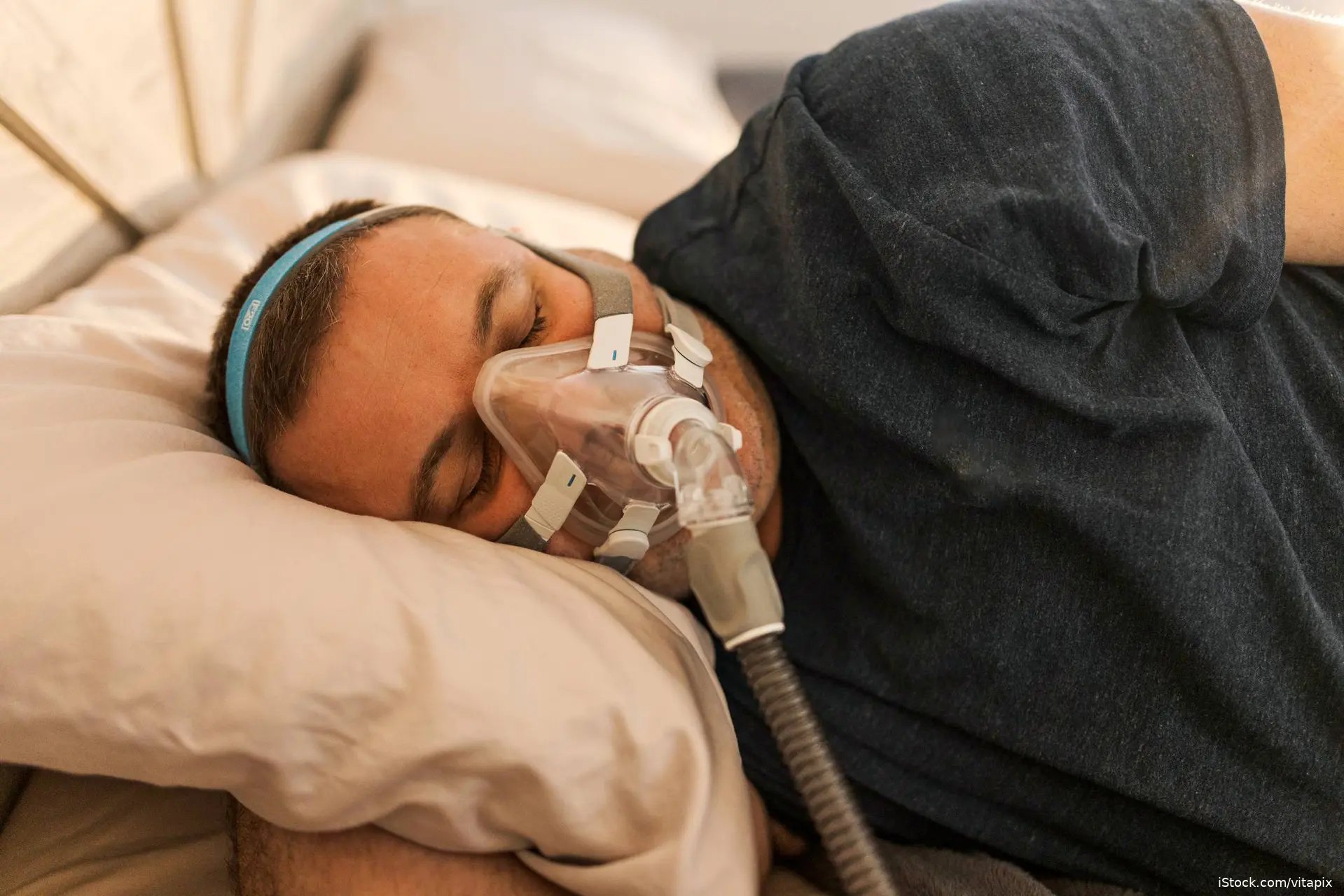
Obstructive sleep apnea (OSA) was associated with a higher risk of cardiovascular events among adults with cancer, according to a retrospective cohort study published in the Journal of the American Heart Association.
Investigators used the TriNetX US collaborative network to identify 4,801,487 adults aged 40 years or older who received a new diagnosis of solid or metastatic cancer from 2012 through 2023. The cohort included 643,143 patients with OSA. After propensity score matching for demographic characteristics and comorbidities, the analysis included 629,114 patients in each of the OSA and non-OSA groups.
The primary outcome was a composite of heart failure, atrial fibrillation or flutter, myocardial infarction or coronary revascularization, ischemic stroke, and all-cause mortality. Compared with patients without OSA, those with OSA had a 27% higher hazard of the composite outcome (hazard ratio [HR], 1.27; 95% CI, 1.26-1.28).
OSA was also associated with higher risks of heart failure (HR, 1.80; 95% CI, 1.78-1.83), atrial fibrillation or flutter (HR, 1.71; 95% CI, 1.69-1.74), myocardial infarction (HR, 1.42; 95% CI, 1.39-1.45), and ischemic stroke (HR, 1.41; 95% CI, 1.38-1.44). The association with heart failure was strongest among women, and elevated cardiovascular risk was observed across body mass index categories, including among patients without obesity. All-cause mortality was lower in the OSA group (HR, 0.84; 95% CI, 0.83-0.85).
The authors noted that reliance on diagnostic codes may have resulted in misclassification and that the analysis did not account for cancer stage or specific cancer therapies. Because of the observational design, the findings do not establish causation, and the study could not determine whether OSA treatment affected cardiovascular outcomes. Investigators said the results support evaluating OSA screening in oncology populations and called for studies examining whether OSA-directed therapies affect cardiovascular outcomes.
Source: Aneni EC, Pena CJ, Ahmed O, Otite FO. Obstructive sleep apnea and the risk of cardiovascular disease and stroke among patients with cancer: analyses from a multicenter electronic health care records-based database. J Am Heart Assoc. Published online August 20, 2026. doi:10.1161/JAHA.125.045805
Advertisement
Today's Joke
Cartoon Slide Show

Quiz

Medical Trivia 9/9/2026
1 questions · ≈ 1 min
to compete in the ranking.
×
Loading