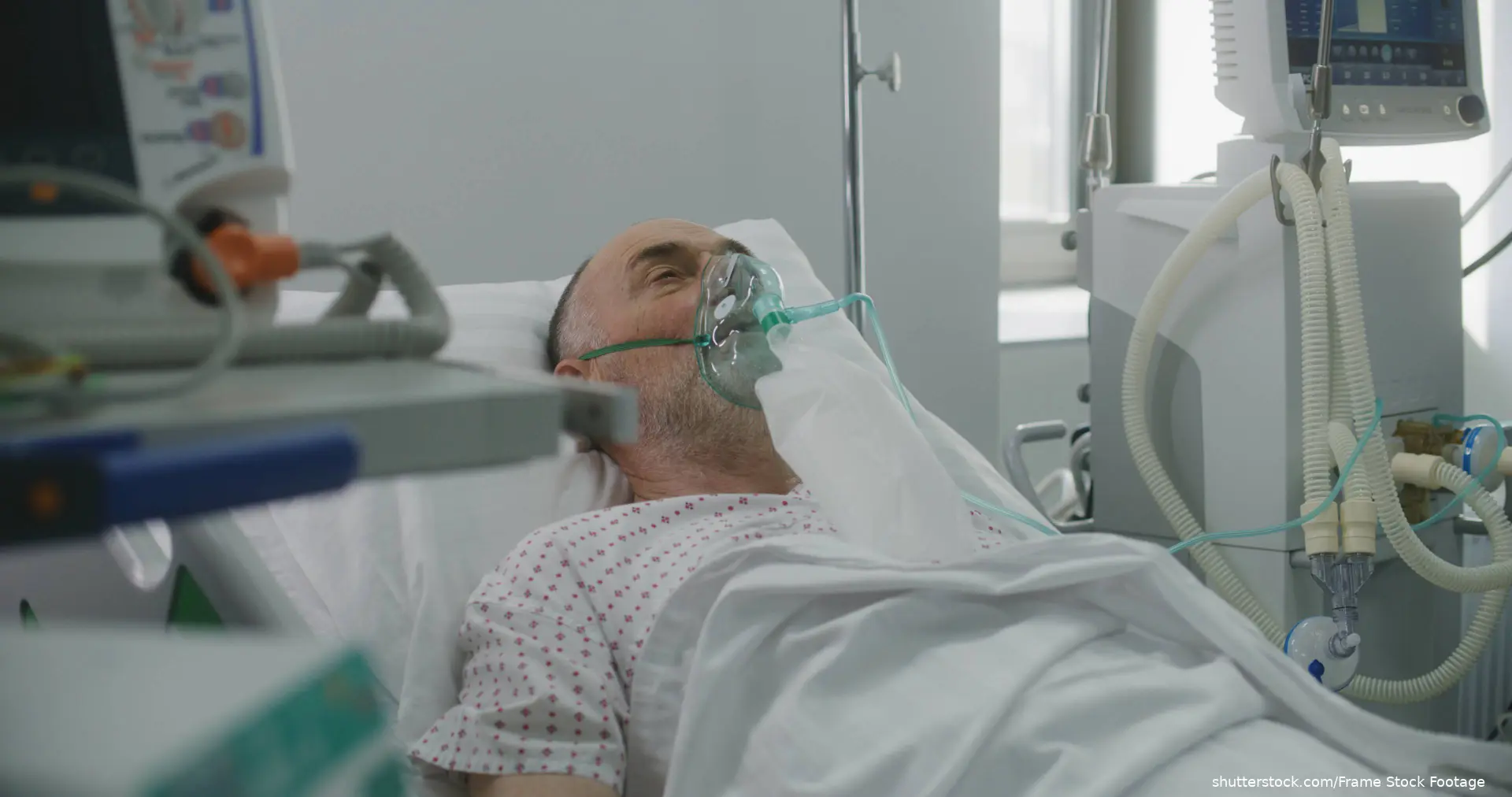
In a prospective observational study of adults hospitalized with community-acquired pneumonia (CAP) in southern India, the SMART-COP score showed better discrimination than CURB-65 for predicting the need for intensive respiratory or vasopressor support (IRVS). The article in press was published in npj Primary Care Respiratory Medicine.
Investigators consecutively enrolled 123 adults at a teaching hospital in Manipal, India, from June 2024 through September 2025. SMART-COP scores were calculated using clinical, laboratory, and radiographic data obtained within 24 hours of admission and before intensive care unit (ICU) transfer or IRVS initiation. IRVS included noninvasive or invasive mechanical ventilation or vasopressor support.
The cohort had a mean age of 61.3 years, and 54.5% were men. Overall, 95 patients (77.2%) were admitted to the ICU, 72 (58.5%) required IRVS, and 18 (14.6%) died during hospitalization. Intensive respiratory support was required by 56.9%, while 24.4% received inotropic support.
At a cutoff of 5 or higher, SMART-COP predicted IRVS with an area under the receiver operating characteristic curve (AUROC) of 0.901, compared with 0.805 for CURB-65 (P=.007). SMART-COP also showed better discrimination for ICU admission (AUROC, 0.927 vs 0.793; P=.001). Each 1-point increase in SMART-COP was associated with a rate ratio of 1.34 for expected ICU days across the full cohort. However, SMART-COP’s discrimination for in-hospital mortality was more limited and did not differ significantly from CURB-65 (AUROC, 0.715 vs 0.615; P=.137).
The investigators noted that the single-center tertiary-care setting produced a cohort with a high prevalence of severe illness, limiting generalizability. Other limitations included the modest sample size, 18 mortality events, assessment of SMART-COP only at admission, and the absence of microbiological and antimicrobial-treatment data. The authors called for multicenter validation in broader primary-care populations.
Source: Pahari A, Bhat N. Predicting intensive care needs in community-acquired pneumonia: clinical utility of the SMART-COP score in Southern India. NPJ Prim Care Respir Med. Published online September 1, 2026. doi:10.1038/s41533-026-00555-w
Advertisement
Today's Joke
Cartoon Slide Show

Quiz
Medical Trivia 9/9/2026
1 questions · ≈ 1 min
to compete in the ranking.
×
Loading