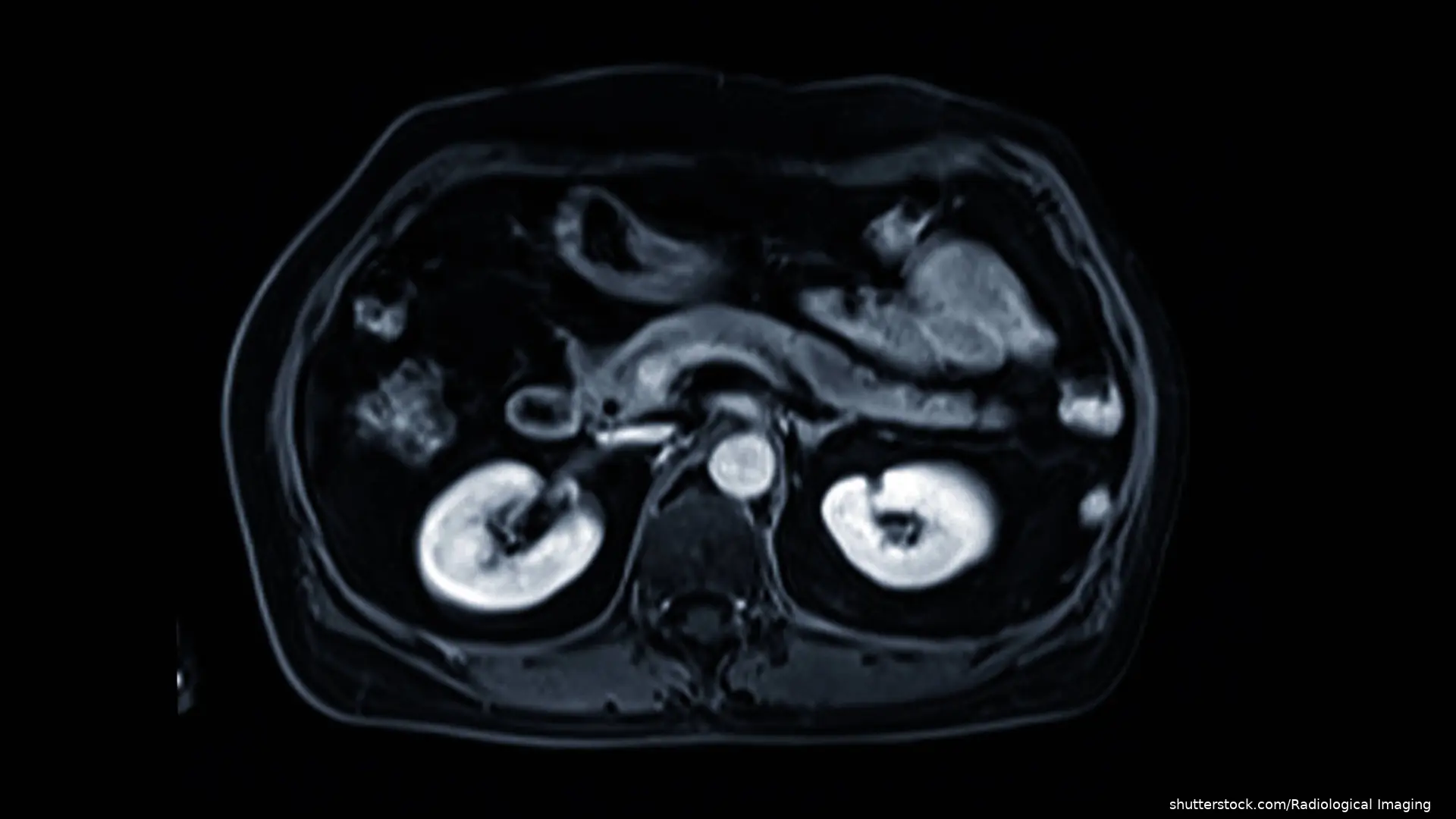
A risk prediction model developed and validated in 2 independent Chinese cohorts estimated short-term pancreatic cancer risk among people with new-onset or long-standing type 2 diabetes, according to a retrospective longitudinal cohort study published online in Gut.
The authors noted that people with diabetes are a priority group for pancreatic cancer screening and that tailored risk models can improve both stratification and screening efficiency. However, they wrote, most existing tools focus on new-onset diabetes, leaving out people with long-standing type 2 diabetes.
Investigators built the Short-Term Risk Prediction of Pancreatic Cancer in Diabetes Mellitus (STOP-DM) model using a random forest algorithm and 11 routinely available clinical predictors to estimate risk at 6, 12, 24, and 36 months. The Tianjin Diabetes and Health Cohort (n=330,767; NCT06913153) was used for derivation and internal validation, and the Xiamen Regional Electronic Health Record Database (n=105,537) was used for external validation.
Predictive performance was highest at 6 months, with an area under the receiver operating characteristic curve of 0.88 in the derivation cohort, 0.89 in internal validation, and 0.86 (95% CI, 0.83-0.89) in external validation. In the 2 validation cohorts, the top 5% high-risk group identified 59.37% and 48.03% of incident cases and had 11.00-fold and 14.37-fold higher risk than the lowest-risk group. According to the investigators, the model performed well in both new-onset and long-standing diabetes and outperformed existing models for new-onset diabetes in sensitivity and positive predictive value.
The authors concluded that STOP-DM provides a practical approach to stratifying pancreatic cancer risk and delivering targeted screening for individuals with type 2 diabetes, particularly those with long-standing diabetes. They added that prospective validation and real-world implementation studies are warranted.
Source: Zhu H, Fan H, Yang W, et al. Short-term risk prediction model for pancreatic cancer in type 2 diabetes: development and validation across two independent Chinese cohorts. Gut. Published online October 6, 2026. doi:10.1136/gutjnl-2026-339722
Advertisement
Today's Joke
Cartoon Slide Show


Quiz

Medical Trivia 10/30/2026
1 questions · ≈ 1 min
to compete in the ranking.
×
Loading