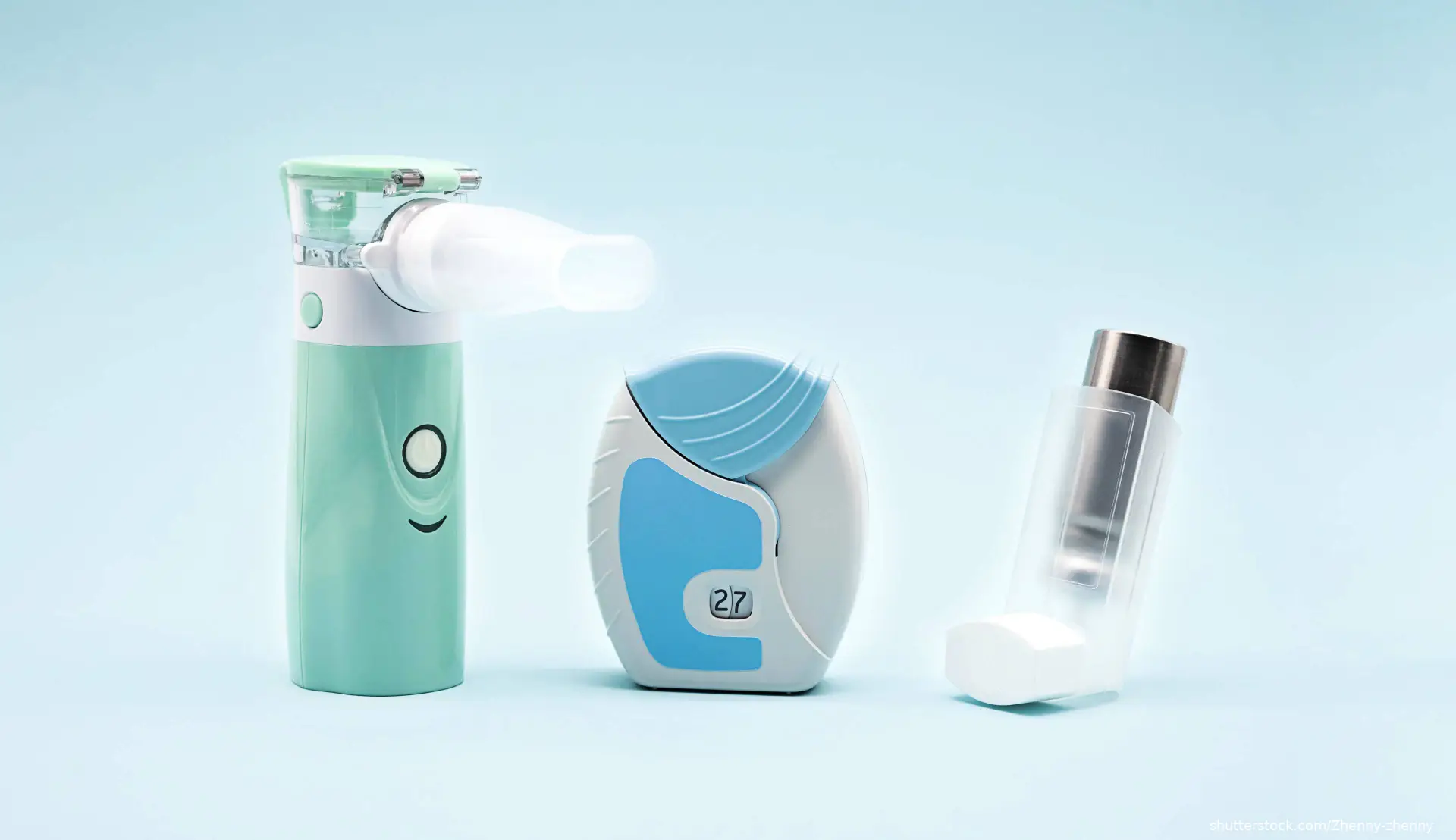
Two cross-sectional research letters published in JAMA Network Open found that metered-dose inhalers (MDIs) dominate US inhaler use and face fewer insurance barriers than propellant-free dry powder inhalers (DPIs) and soft mist inhalers (SMIs).
According to both studies, MDIs contain hydrofluoroalkane propellants with substantially higher global warming potential than DPIs and SMIs.
In the first study, investigators analyzed IQVIA data on 108,476,840 retail pharmacy inhaler fills in 2024 across commercial insurance, Medicare Part D, and Medicaid. MDIs accounted for 73.1% of fills overall and 84.9% of Medicaid fills, and for 98.97% of an estimated 2.31 million metric tons of inhaler-related carbon dioxide equivalent emissions. Mean out-of-pocket costs were lower for MDIs than DPIs ($12.10 vs $35.45; P < .001), although generic fluticasone-salmeterol DPIs cost less than the MDI version in Medicare Part D and commercial insurance.
In the second study, investigators assessed 31,219 US commercial plan formularies in May 2026. More than 99% of plans covered at least 1 MDI in each class studied, but coverage of at least 1 DPI or SMI was 33.2% for short-acting β2-agonists (SABAs), 89.5% for inhaled corticosteroids (ICS), and 82.6% for ICS–long-acting β2-agonist combinations. Preferred-tier coverage without prior authorization or step therapy was available for MDIs in 88.7% to 99.2% of plans, depending on class, compared with 7.8% to 61.8% for propellant-free options, with the largest gap among SABAs.
The investigators noted limitations. The formulary analysis could not account for plan enrollment or actual out-of-pocket costs, and the fills analysis lacked data on clinical indications, inspiratory flow, and patient preferences. The formulary study authors said meaningful emission reductions will require lower barriers to propellant-free options while preserving MDI access when clinically indicated.
Sources: Qato DM, Scannell C, Li Q, et al. Use and out-of-pocket costs of inhaler devices by payer type and estimated carbon dioxide emissions. JAMA Netw Open. 2026;9(9):e2634313. doi:10.1001/jamanetworkopen.2026.34313
Parthasarathi A, Modha P, Chellappan A, et al. Insurance coverage and access requirements for lower-emission inhalers in US commercial health plans. JAMA Netw Open. 2026;9(9):e2634318. doi:10.1001/jamanetworkopen.2026.34318
Advertisement
Today's Joke
Cartoon Slide Show


Quiz

Medical Trivia 10/30/2026
1 questions · ≈ 1 min
to compete in the ranking.
×
Loading