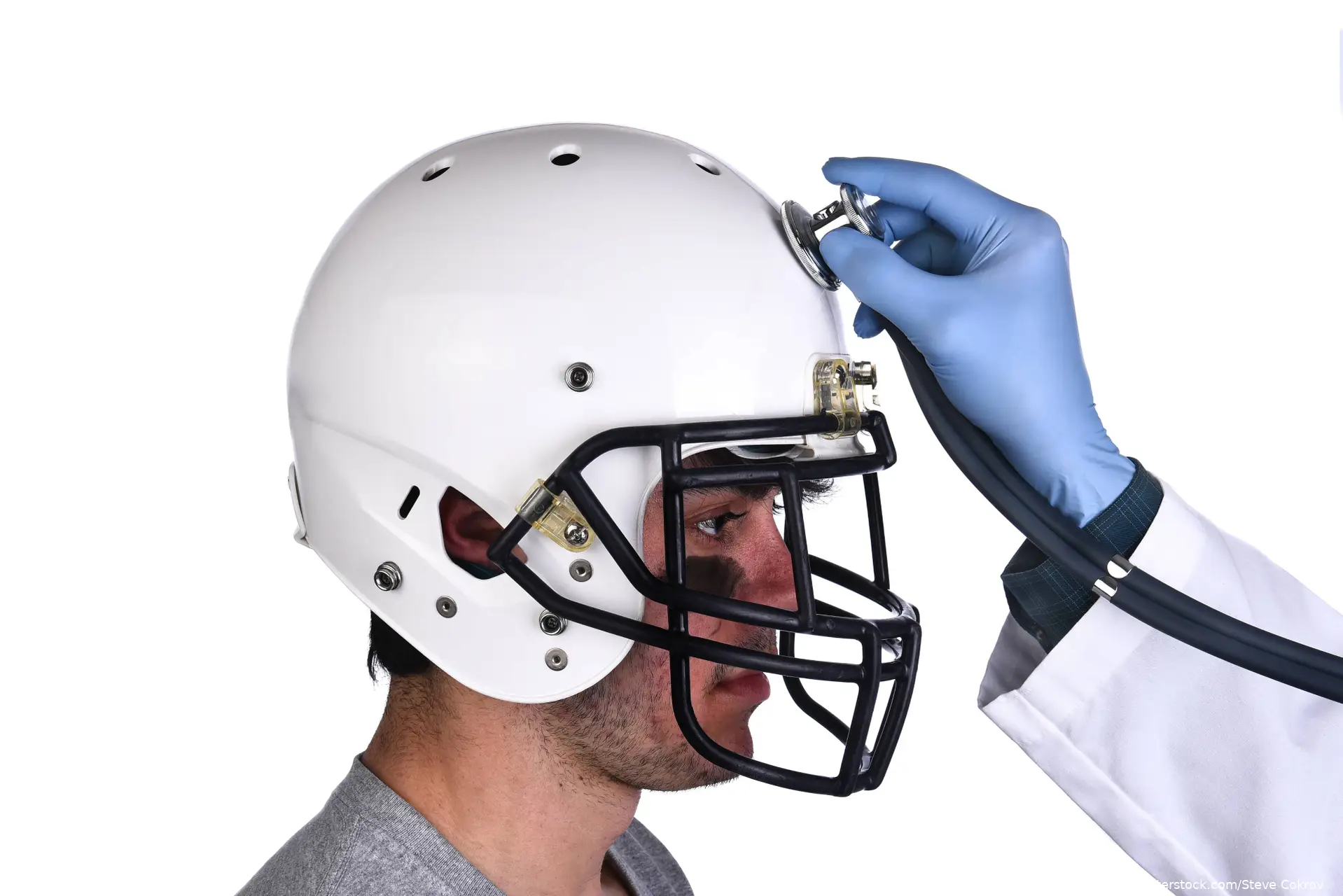
After accounting for selection bias in brain donation, an estimated 74.5% of former National Football League (NFL) players who died between 2008 and 2023 had chronic traumatic encephalopathy (CTE) neuropathology at death, according to a cross-sectional study published in JAMA Network Open.
According to the investigators, most knowledge about CTE in NFL players comes from autopsy studies of voluntarily donated brains, which are highly vulnerable to selection bias, and the population-level prevalence of CTE among former NFL players has been unknown.
The population-based study combined data from the Understanding Neurologic Injury and Traumatic Encephalopathy (UNITE) brain bank with National Death Index records for 2362 former NFL players who had played in at least 1 regular or postseason game; 396 were brain donors and 1966 were nondonors. Among 387 donors with a determined CTE status, 362 (93.5%) had CTE. Using dementia-related cause of death and estimated mild cognitive impairment prevalence as proxies for clear cognitive symptoms, the investigators estimated that players with such symptoms were approximately 5 times more likely to have their brains donated. After adjustment, the estimated population prevalence of CTE at death was 74.5% (95% CI, 69.6%-78.3%).
A conservative lower-bound analysis estimated a CTE prevalence of 63.7%. The bias-adjusted prevalence of all-cause dementia history during life was 27.2%.
The investigators noted several limitations, including reliance on proxies rather than direct clinical assessment of nondonors, possible unmeasured factors influencing donation, and inclusion of all stages of CTE, many of which may have been early stage and possibly symptom free at death. The results apply specifically to deceased NFL players and do not generalize to living former players or to individuals with lower levels of repetitive head impact exposure, they wrote. The authors concluded that selection bias materially inflates donor-based prevalence estimates but is unlikely to fully explain the high burden of CTE neuropathology in this population, and that further research is required to understand the clinical impact of the disease.
Source: Gallini J, Alosco ML, Abdolmohammadi B, et al. Bias-adjusted prevalence of chronic traumatic encephalopathy among deceased National Football League players. JAMA Netw Open. 2026;9(10):e2640884. doi:10.1001/jamanetworkopen.2026.40884
Advertisement
Today's Joke
Cartoon Slide Show


Quiz

Medical Trivia 10/30/2026
1 questions · ≈ 1 min
to compete in the ranking.
×