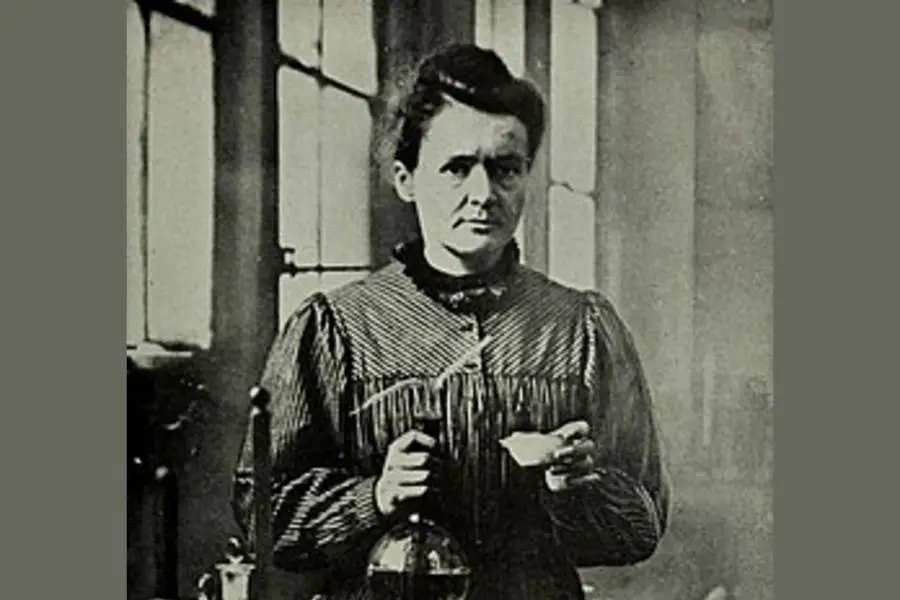
Marie Skłodowska Curie (1867–1934)
07 November 2026
Poland / France | Physics and chemistry
Known for: Pioneering research on radioactivity
Nobel Prizes: Physics in 1903 and Chemistry in 1911
Birthday: November 7, 1867
Why she matters: Curie's discoveries helped establish the scientific foundations of radioactivity research and contributed to the development of medical imaging and radiation-based treatment. She was the first woman to win a Nobel Prize and remains the only person ever to win Nobel Prizes in two different scientific disciplines.
At a Glance
- Co-discovered polonium and radium.
- Became the first woman to receive a Nobel Prize and the first person to win two Nobel Prizes.
- Organized mobile X-ray services during World War I.
Key Milestones
| Date | Contribution |
| July 1898 | Marie and Pierre Curie announced evidence of polonium. |
| December 1898 | Announced evidence for radium with Pierre Curie and Gustave Bémont. |
| December 1903 | Shared the Nobel Prize in Physics with Pierre Curie and Henri Becquerel. |
| December 1911 | Received the Nobel Prize in Chemistry. |
| 1914–1918 | Organized mobile radiography services, and trained hundreds of operators, for wounded soldiers during World War I. |
| July 4, 1934 | Died at the age of 66, in Haute-Savoie, France of aplastic anemia, likely caused by years of radiation exposure. |
Impact on Medicine Today: Curie's research helped establish the foundations for medical uses of radioactivity, including nuclear medicine and radiotherapy. Her wartime work also expanded the practical use of X-ray imaging.
Today's Joke
Cartoon Slide Show


Quiz

Medical Trivia 11/24/2026
1 questions · ≈ 1 min
to compete in the ranking.
×