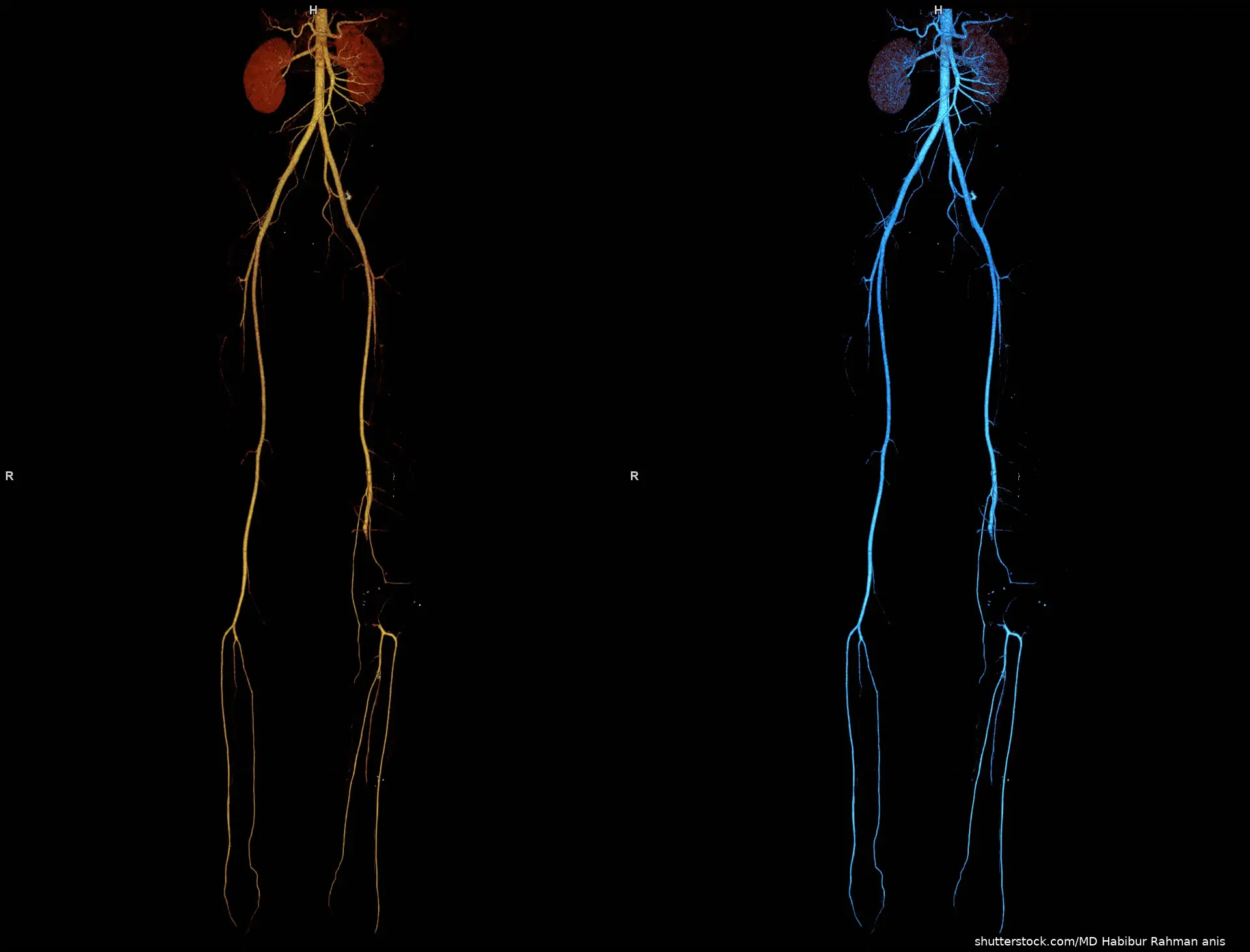
Peripheral artery disease (PAD) greatly increases the risk of iatrogenic injury in hospitalized patients, even when it is not the reason for admission, according to a new scientific statement from the American Heart Association (AHA) published in Circulation.
The writing group, chaired by Jennifer A. Rymer, MD, MBA, MHS, said PAD is often misdiagnosed or diagnosed late and is undertreated even after diagnosis. The authors noted that more than 15% of adults older than 65 years and about 20% of octogenarians have PAD, and that guidelines and consensus statements have given limited attention to vascular complications of mechanical circulatory support (MCS) and other arterial access–dependent procedures.
The statement cites vascular complication rates of about 0.6% for diagnostic procedures, 2.6% for elective percutaneous coronary intervention (PCI), and up to 6% for complex PCI, rising to between 6.7% and 9.6% or more with large-bore access. Among patients with Impella devices, 9.6% develop limb ischemia, while 40% of those receiving extracorporeal membrane oxygenation have bleeding or limb ischemia.. In patients with PAD, the authors described preprocedural computed tomography angiography or duplex ultrasound as essential for assessing vessel size, calcification, and tortuosity, with transaxillary access as an alternative when femoral arteries are inadequate.
The authors described hospitalization as an opportunity to initiate guideline-recommended therapy, noting that rivaroxaban, PCSK9 inhibitors, and GLP-1 receptor agonists have been shown to reduce both cardiovascular and limb events, although their use in PAD remains low. The statement describes dual-pathway inhibition with rivaroxaban 2.5mg twice daily plus aspirin as preferred for symptomatic PAD unless high bleeding risk or another indication, such as dual antiplatelet therapy after recent PCI, applies. It also addresses wound offloading, nutrition, and postsurgical surveillance.
The authors identified barriers to care, including limited access to specialists, medication costs, and racial disparities, and said discharging clinicians should ensure outpatient follow-up with a vascular specialist. They concluded that acutely ill patients with PAD require a tailored treatment strategy.
Source: Rymer JA, Banerjee S, Beckman J, et al. Peripheral artery disease in acute care settings: diagnosis and management of common presentations and emergencies: a scientific statement from the American Heart Association. Circulation. Published online November 16, 2026. doi:10.1161/CIR.0000000000001479


Advertisement
Today's Joke
Cartoon Slide Show


Quiz

Medical Trivia 11/24/2026
1 questions · ≈ 1 min
to compete in the ranking.
×