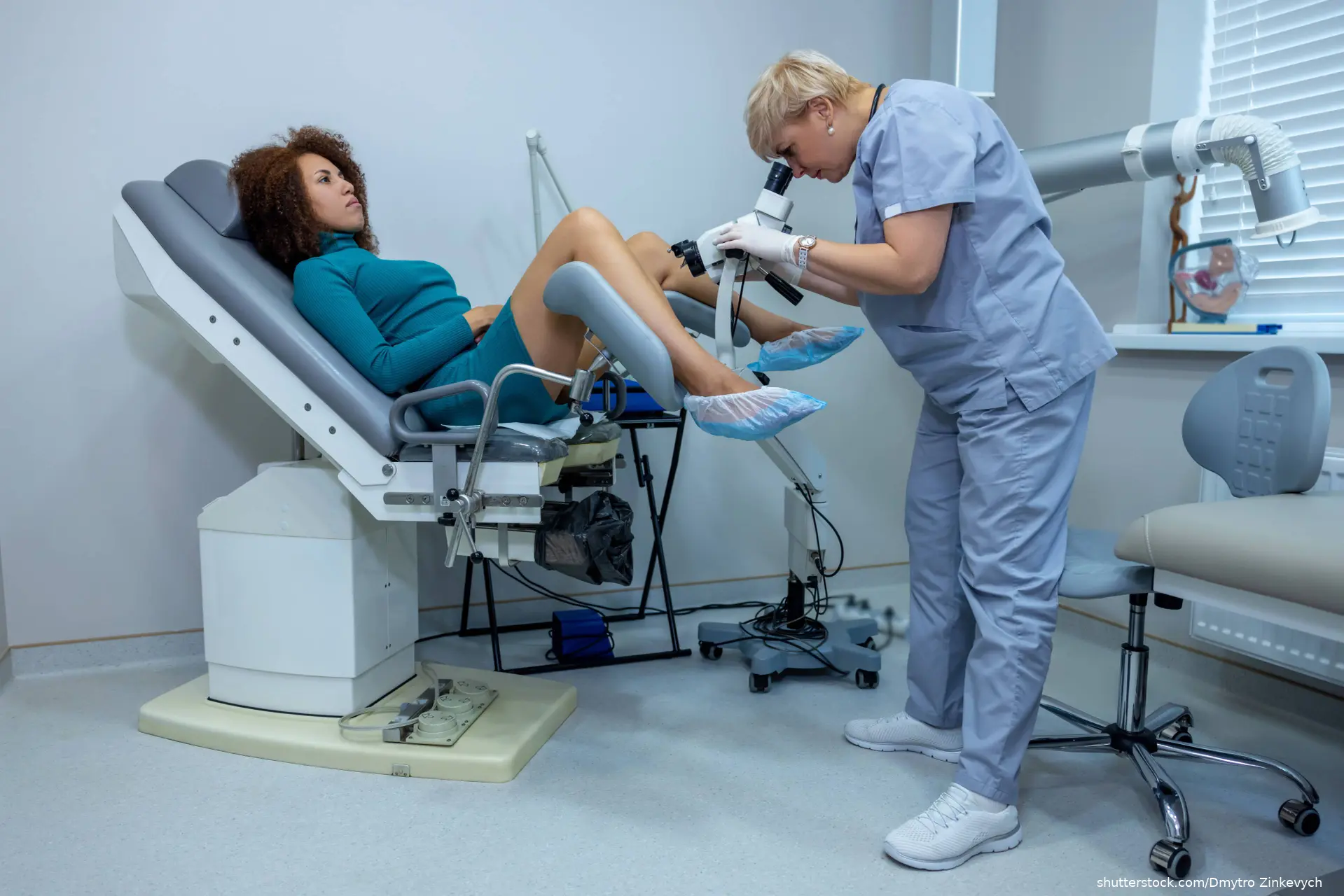
An artificial intelligence (AI)-guided colposcopy system showed higher sensitivity when used by colposcopists evaluating cervical intraepithelial neoplasia grade 2 or worse (CIN2+), according to a proof-of-concept diagnostic accuracy study published in npj Digital Medicine.
Investigators externally validated the Colposcopic Artificial Intelligence Auxiliary Diagnostic System using an independent World Health Organization/International Agency for Research on Cancer dataset comprising 855 images from 187 patients. Histopathology identified 76 CIN2+ cases and 111 cases below CIN2. Forty-five colposcopists from 12 regions in China participated across 2 reader studies.
As a standalone system, the AI achieved 84.2% sensitivity and 55.9% specificity for CIN2+ detection. In the multireader, multicase study, 15 colposcopists interpreted the cases without and with AI assistance after a 2-week washout period. Sensitivity across all readers increased descriptively from 84.8% to 90.6%, while accuracy increased from 70.4% to 73.6%.
The prespecified primary comparison was the change in area under the receiver operating characteristic curve (AUC). Overall AUC increased from 72.8% without AI to 76.5% with AI, but the difference was not statistically significant (P=0.057). Among 11 less-experienced colposcopists, AUC increased from 72.4% to 76.3% (P=0.043), and sensitivity increased from 82.2% to 88.7%. The mean number of biopsies indicated per CIN2+ case decreased from 2.48 to 2.02 with AI assistance.
Limitations included simulated assessment using public images without complete primary screening or clinical information, possible reading-order and confirmation biases, and the absence of site-specific histopathology for assessing biopsy performance. The authors concluded that the preliminary findings require validation in large, multicenter prospective trials before the system’s clinical utility and generalizability can be established.
Source: Wu T, Wang Y, Cui X, et al. External validation of AI assisted colposcopy using WHO dataset for cervical precancer and cancer detection. npj Digit Med. 2026. doi:10.1038/s41746-026-02961-3


Peter is a physician with experience in clinical research and evidence-based medical content, specializing in translating complex clinical research and emerging medical evidence into accurate, accessible, and clinically relevant information for HCPs.
Advertisement
Today's Joke
Cartoon Slide Show


Quiz

Medical Trivia 9/9/2026
1 questions · ≈ 1 min · 12 players
to compete in the ranking.
×
Loading