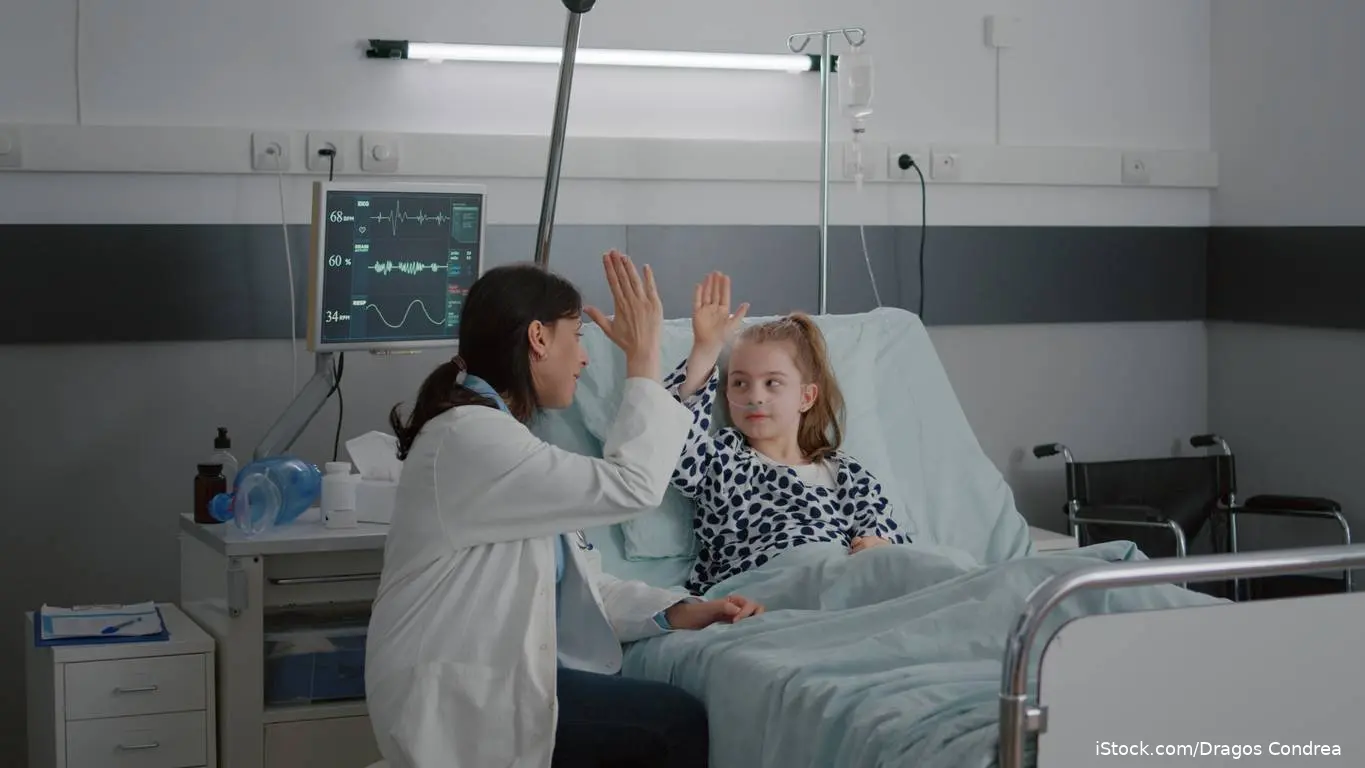
Missed opportunities to reduce or discontinue continuous sedative infusions were common among critically ill children, according to a multicenter cohort study published in JAMA Network Open. Greater adherence to identified weaning opportunities was associated with shorter intensive care unit (ICU) and hospital stays.
The study included 15,747 ICU encounters involving 12,737 children treated at four pediatric academic medical centers from January 2011 through December 2024. Eligible patients had at least 48 hours of cumulative continuous sedative infusion exposure; neonatal ICU encounters were excluded. Median patient age was 1.1 years, and 56% of encounters involved male patients.
Investigators defined a weaning opportunity as a 12-hour period in which a patient received no more than one as-needed sedative dose. A weaning action consisted of decreasing or discontinuing an infusion. Across a median of 30 opportunities per encounter, median adherence was 28%, meaning 72% of opportunities were missed. Median ICU and hospital stays were 13 and 26 days, respectively.
Each 10-percentage-point increase in weaning adherence was associated with a 2.3-day shorter ICU stay and a 3.6-day shorter hospital stay. It was also associated with a 1.1-day shorter combined sedative infusion duration and lower cumulative exposure to opioids, benzodiazepines, and alpha-2 agonists. All reported associations were statistically significant (P<.001).
The observational design does not establish that greater weaning adherence caused shorter stays. The investigators also noted that sedative duration and cumulative exposure were derived using the same medication-period algorithm as weaning opportunities, mechanical ventilation duration was not analyzed, and findings may not generalize to neonatal ICU patients or children exposed to infusions for less than 2 days. The authors identified weaning adherence as a potentially modifiable quality-improvement target.
Source: Smith TM, Ducatez F, Achuff BJ, et al. Adherence to sedative weaning opportunities and length of stay for critically ill children. JAMA Netw Open. 2026;9(8):e2629399. doi:10.1001/jamanetworkopen.2026.29399
Advertisement
Today's Joke
Cartoon Slide Show

Quiz
Medical Trivia 9/9/2026
1 questions · ≈ 1 min
to compete in the ranking.
×
Loading