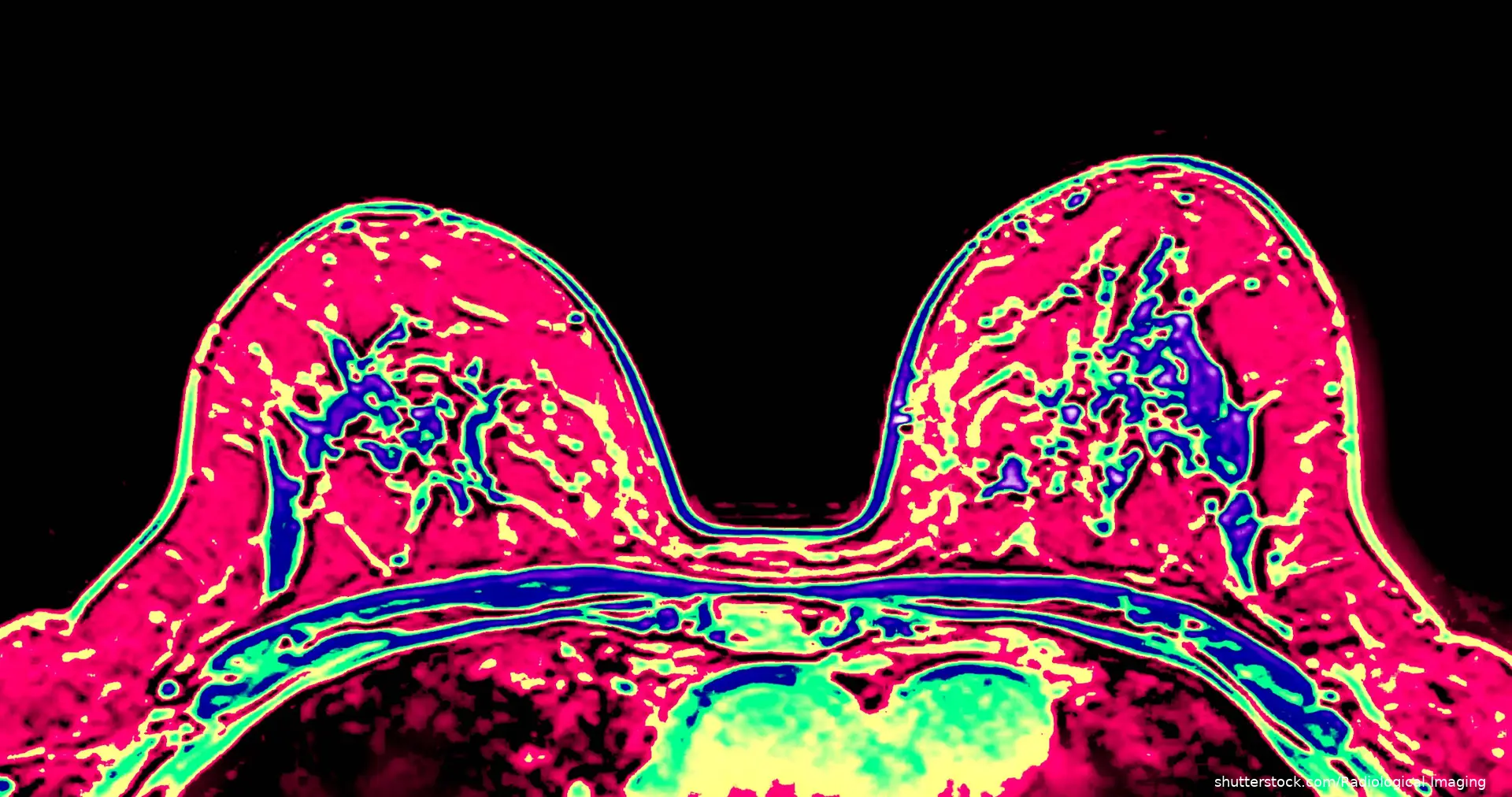
An automated deep learning tool for segmenting breast tumors on dynamic contrast-enhanced MRI (DCE-MRI) produced tumor measurements that closely agreed with those derived from expert-drawn masks across internal and external cohorts, according to a retrospective multicohort study published in npj Digital Medicine.
The investigators noted that geometric overlap alone does not establish the fidelity of mask-derived measurements, so they made measurement fidelity the primary end point. Their enhancement-aware 3-dimensional MedNeXt model was developed in a source population of 1,506 cases and evaluated in a locked internal test set, a held-out stratum from a separate source, 2 retrospective external validation cohorts, and a blinded 2-reader review.
Across 521 paired internal-test and held-out cases, median errors between automatic and expert masks were 9.7% for tumor volume, 1.8mm for 3D maximum surface diameter, and 10.2% for enhancement-defined volume. The authors reported strong agreement for both volume measures and lower agreement for diameter, with errors of the same order as reader-to-reader differences (8%, 1.6mm, and 11%). Using the frozen model without external-label tuning, median Dice overlap was 0.831 internally and 0.812 and 0.806 in the 2 external cohorts of 186 and 96 cases.
In the blinded review, 78 of 80 masks required no major correction, and in a timed subset, automatic initialization reduced median correction time from 86 to 29 seconds. Performance was lowest for non-mass enhancement and small lesions. In a secondary analysis of 276 cases predicting pathological complete response, the area under the receiver operating characteristic curve was 0.732 with automatic geometry vs 0.757 with expert geometry, and noninferiority in discrimination was not demonstrated.
The authors noted that the study was retrospective, the external cohorts were modest in size, and reference standards followed source-specific annotation protocols. The response analysis was secondary, used a development-linked cohort, and excluded 16 records, all from patients without complete response. The authors concluded that the findings support automated masks as expert-supervised tools for retrospective tumor-measurement research but do not establish autonomous clinical deployment, and called for prospective evaluation.
Source: Tan C, Chen L, Xu J, et al. Measurement fidelity and external validation of automated breast DCE-MRI segmentation. npj Digit Med. Published online November 14, 2026. doi:10.1038/s41746-026-03446-z
Advertisement
Today's Joke
Cartoon Slide Show


Quiz

Medical Trivia 11/24/2026
1 questions · ≈ 1 min
to compete in the ranking.
×