FDA-Cleared AI for Pulmonary Embolism Detection Showed Lower Real-World Sensitivity in Clinical Use
News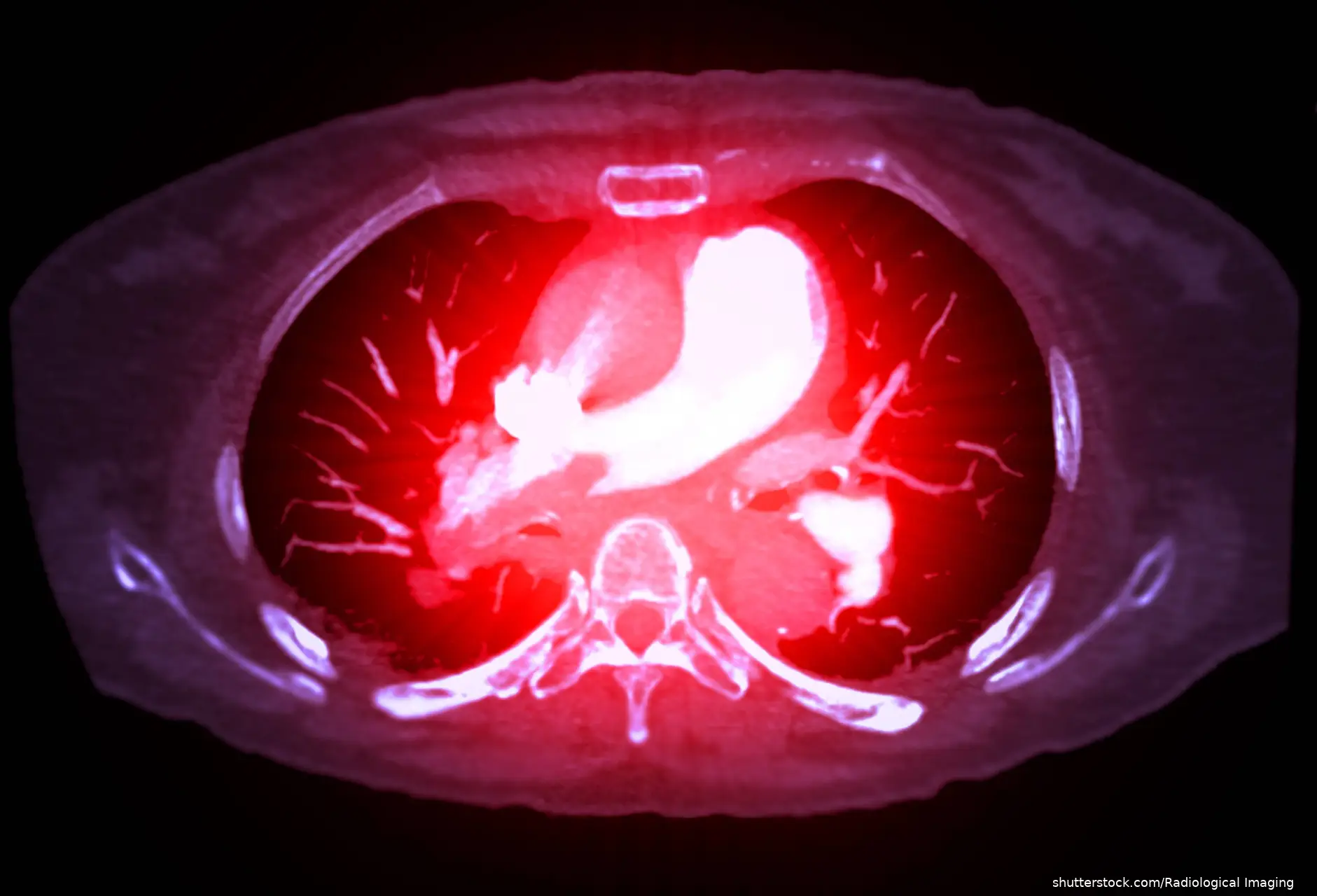
Two FDA-cleared artificial intelligence (AI) algorithms for pulmonary embolism (PE) detection showed lower sensitivity in clinical use than in their FDA clearance benchmarks, while exceeding cleared specificity, according to a retrospective study published in npj Digital Medicine.
Researchers at Emory University School of Medicine and colleagues evaluated 2 algorithms on the BriefCase AI triage platform (Aidoc Medical). The algorithms were deployed across a 17-facility academic health system between April 2023 and April 2025. One triages PE on dedicated CT pulmonary angiography (CTPA). The other detects incidental PE (iPE) on routine contrast-enhanced chest and abdominal CT. Reference-standard labels were extracted from radiology reports using a large language model pipeline with 97% accuracy.
Across 30,678 CTPA studies, the PE model achieved 86.8% sensitivity (95% CI, 85.6%-87.9%) and 99.1% specificity; the manufacturer’s FDA 510(k) clearance reported 94.86% sensitivity. Sensitivity declined from 99.3% for saddle emboli to 72.9% for subsegmental PE, and it was 89.7% for acute PE versus 65.3% for non-acute PE. Among 37,191 routine CT studies, the iPE model achieved 73.5% sensitivity and 99.8% specificity, compared with an FDA-reported sensitivity of 89.7%.
The investigators also examined 1225 patients who underwent dedicated PE-protocol imaging within 30 days of a routine CT. Of 61 iPEs confirmed on follow-up imaging, the algorithm had flagged 42 (68.9%) on the initial scan and missed 19 (31.1%). The authors said this indicates the tool functions as an adjunct to, rather than a replacement for, radiologist interpretation. They described performance as broadly consistent across age, sex, and patient class. Sensitivity was slightly lower in some racial minority subgroups, but wide confidence intervals precluded definitive conclusions.
Limitations included the retrospective design at a single academic center. The reference standard came from radiology reports rather than independent blinded image review. Because the AI was active during clinical reads, the report-derived labels were not independent of its output; the authors said this bias most likely favors the model. The investigators also could not verify that the deployed model version matched the one evaluated for FDA clearance. The authors called for standardized post-market surveillance of AI-enabled medical devices. Aidoc Medical provided the aggregated prediction outputs but had no role in study design, analysis, or manuscript preparation, and the authors declared no competing interests.
Source: Mansuri A, Chavoshi M, Dapamede T, et al. Multi-site real-world performance of commercial AI for pulmonary and incidental pulmonary embolism detection. npj Digit Med. Published online October 21, 2026. doi:10.1038/s41746-026-03418-3
Advertisement
Today's Joke
Cartoon Slide Show


Quiz

Medical Trivia 10/30/2026
1 questions · ≈ 1 min
to compete in the ranking.
×
Loading