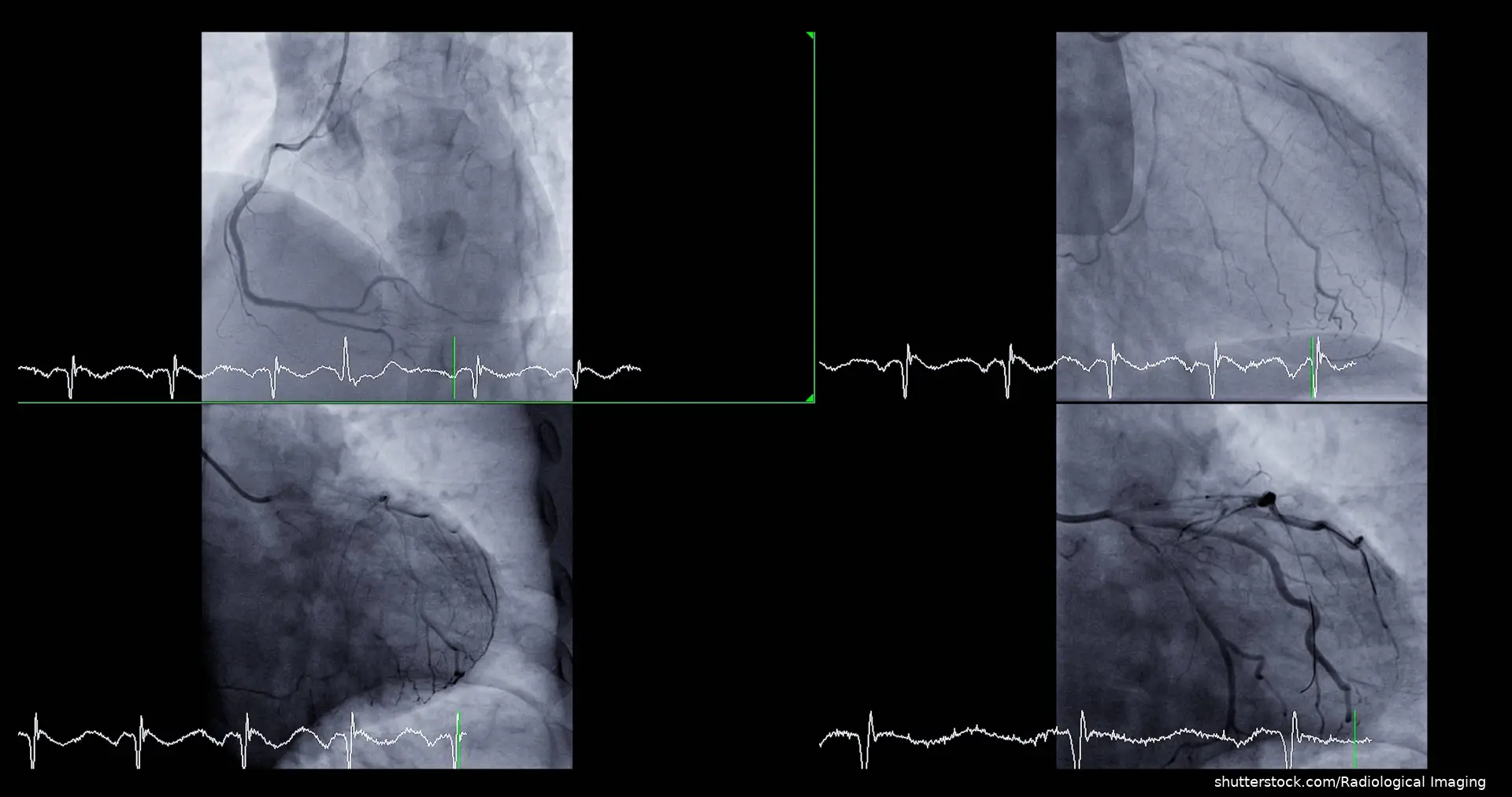
The investigational SonicForce Coronary Intravascular Lithotripsy (IVL) System (Abbott Vascular) met both coprimary safety and effectiveness endpoints in patients with severely calcified de novo coronary lesions, according to 30-day results from the pivotal TECTONIC CAD study published in JACC: Cardiovascular Interventions.
According to the investigators, severe coronary calcification complicates percutaneous coronary intervention (PCI) by limiting lesion compliance and impairing stent expansion. The SonicForce system delivers acoustic pressure waves from emitters within a semicompliant balloon to modify or fracture calcium and increase vessel compliance before drug-eluting stent implantation.
The prospective, single-arm, open-label US investigational device exemption study enrolled 335 patients with stable angina, biomarker-negative unstable angina, or silent ischemia at 40 centers. The primary safety endpoint was 30-day target lesion failure (TLF), a composite of cardiac death, target-vessel myocardial infarction, or clinically driven target lesion revascularization. The primary effectiveness endpoint was procedural success. TLF occurred in 1 of 330 evaluable patients (0.3%), and procedural success was achieved in 324 of 334 (97.0%). Both results met their prespecified performance goals.
The single TLF event was a periprocedural target-vessel myocardial infarction with acute stent thrombosis and repeat revascularization, adjudicated as probably related to the index procedure but unrelated to the study device. No cardiac deaths occurred. In an optical coherence tomography substudy, calcium fracture was seen in 62.5% of lesions after IVL and 66.3% after stenting, and mean stent expansion at the site of maximum calcium was 95.9%. Results were consistent in a post hoc analysis limited to lesions classified as severely calcified by the core laboratory.
The investigators noted that the single-arm design cannot establish comparative efficacy or safety vs other calcium-modification strategies or conventional PCI. The report covers only 30 days, with follow-up planned through 2 years, and patients with acute myocardial infarction, cardiogenic shock, or dialysis dependence were excluded.
Source: Secemsky EA, Ali ZA, Shlofmitz E, et al. TECTONIC CAD: pivotal IDE evaluation of coronary intravascular lithotripsy for severely calcified lesions. JACC Cardiovasc Interv. Published online November 1, 2026. doi:10.1016/j.jcin.2026.10.002

Advertisement
Today's Joke
Cartoon Slide Show


Quiz

Medical Trivia 11/24/2026
1 questions · ≈ 1 min
to compete in the ranking.
×