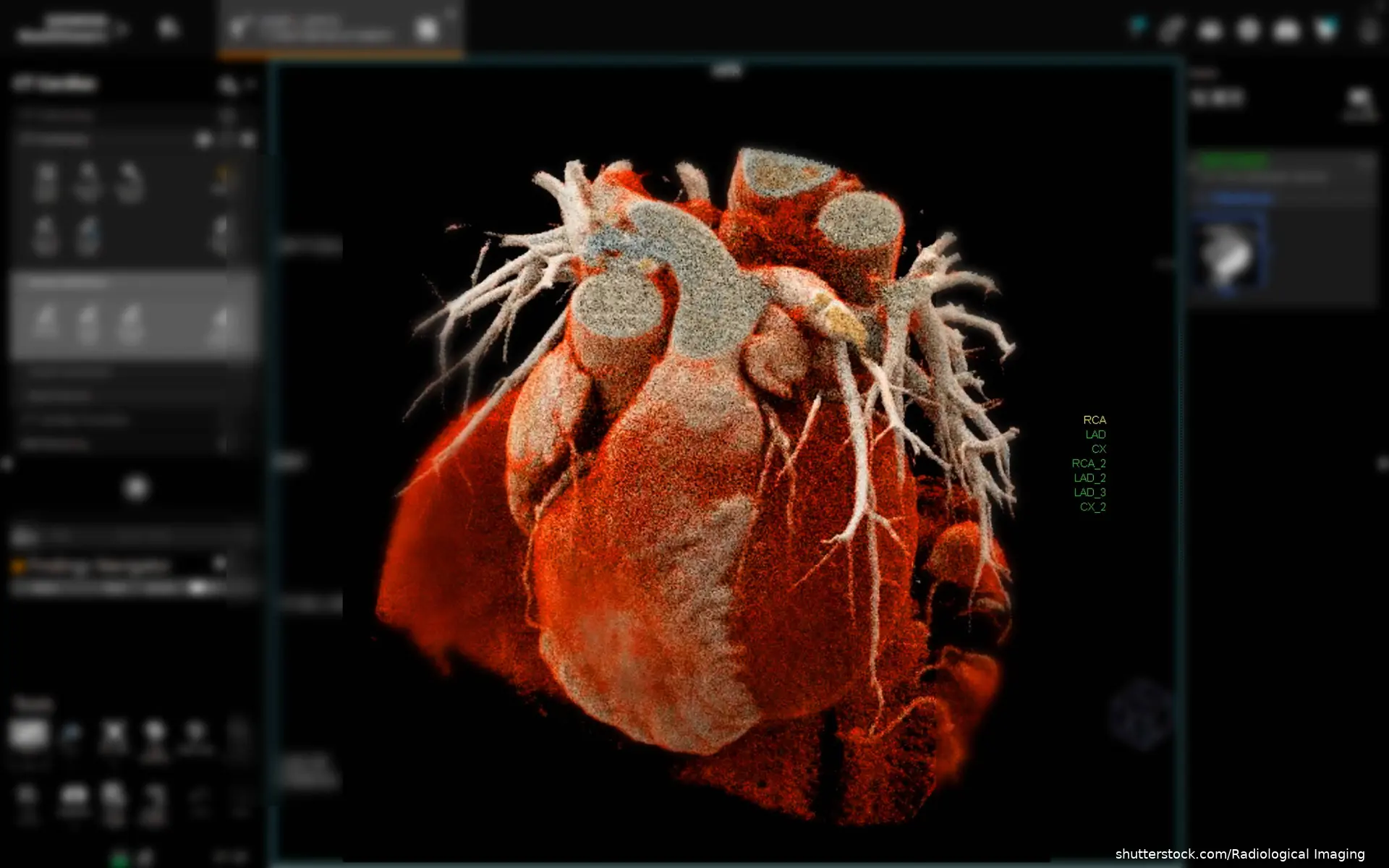
Lower coronary computed tomography angiography–derived fractional flow reserve (FFR-CT) values were associated with a higher risk of myocardial infarction (MI), cardiovascular death, and revascularization over 3 years, independent of clinical risk factors and stenosis severity, according to a nationwide observational study published in Circulation.
The investigators noted that the prognostic value of FFR-CT has been less clear than its diagnostic value, because earlier studies were limited by small populations, variable measurement points, composite outcomes, and short follow-up.
The retrospective analysis drew on the FISH&CHIPS cohort and included 7836 patients with stable coronary artery disease (CAD) who underwent clinically indicated FFR-CT analysis (HeartFlow) at 27 hospitals in England between 2017 and 2020. The median age was 63 years, 37.4% of patients were women, and median follow-up was 3.1 years. After adjustment for cardiovascular risk factors and Coronary Artery Disease Reporting and Data System (CAD-RADS) stenosis severity, stenosis-specific FFR-CT values of 0.70 or lower were associated with roughly 3 times the risk of MI. Severely reduced values (≤0.50) were associated with cardiovascular death (adjusted hazard ratio [aHR], 2.92; 95% CI, 1.19-7.19), and reduced values (0.51-0.70) were associated with all-cause death (aHR, 1.49; 95% CI, 1.01-2.20). Adding FFR-CT to a model of risk factors and stenosis severity improved discrimination for nonfatal MI or cardiovascular death (C index, 0.783 vs 0.771; P<.001).
The investigators identified 0.67 as the optimal stenosis-specific FFR-CT cutoff for future nonfatal MI or cardiovascular death, lower than the conventional diagnostic cutoff of 0.80 or lower. Stenosis-specific and distal-vessel FFR-CT showed similar discrimination for individual outcomes. Among patients with normal stenosis-specific FFR-CT, distal-vessel values were discordant in 36.4%, mostly in the borderline range, and 3-year rates of nonfatal MI or cardiovascular death were low.
The authors noted that, given the observational design, FFR-CT results likely influenced downstream management, particularly revascularization. Data on plaque burden, smoking status, and family history were not available.
Source: Bell JS, Nicol E, Venugopal V, et al; FISH&CHIPS Investigators. Prognostic value of coronary computed tomography angiography–derived fractional flow reserve from a large nationwide cohort. Circulation. Published online September 22, 2026. doi:10.1161/CIRCULATIONAHA.126.081264


Surdeep Kulkarni RPh MSEditor
Surdeep is a pharmacist with extensive experience in medication therapy management, immunization services, patient counseling, medication safety, and evidence-based evaluation of drug information.
Advertisement
Today's Joke
Cartoon Slide Show


Quiz

Medical Trivia 9/9/2026
1 questions · ≈ 1 min · 12 players
to compete in the ranking.
×
Loading