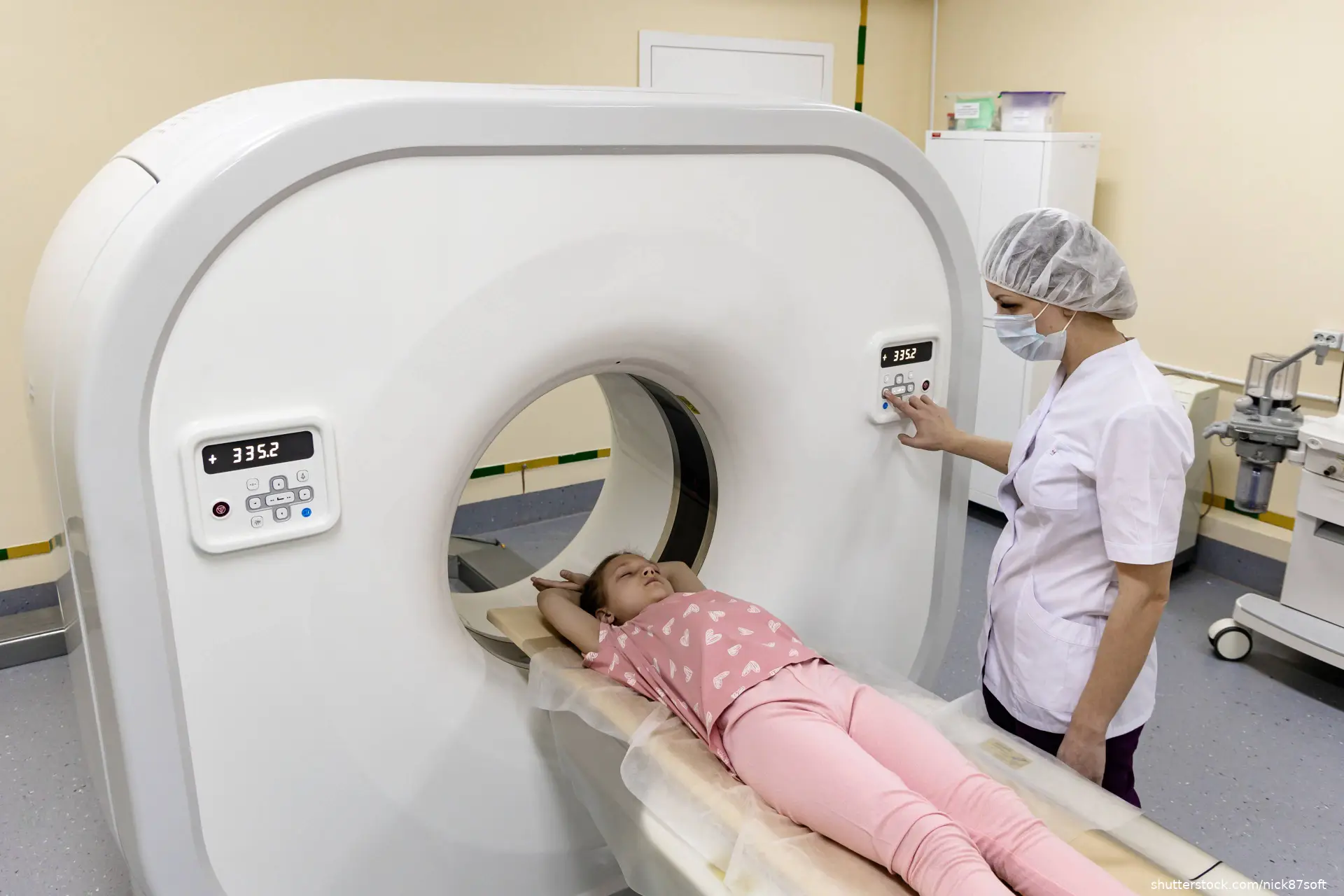
Cumulative ionizing radiation dose to the brain from medical imaging in children and adolescents was associated with a dose-related increase in brain tumor risk, according to a retrospective cohort study published in JAMA.
Investigators led by Diana L. Miglioretti and Rebecca Smith-Bindman, MD, studied children born from 1996 through 2016 who were enrolled from birth in 6 US health care systems or in Ontario, Canada, and were alive and cancer-free at age 2 years. The exposure was cumulative radiation dose to the brain from medical imaging, lagged by 2 years, and the outcome was incident brain or other central nervous system tumors.
Among 3,704,860 children followed for a mean of 12.3 years, 1,536 brain tumors were diagnosed. The mean dose from a single head computed tomography (CT) examination was 66.2mGy. Among children with a cumulative dose of 1mGy or more, the mean cumulative dose was 73mGy overall and 100mGy among those diagnosed with brain tumors.
Compared with no exposure, brain tumor risk generally increased with higher cumulative dose, with a statistically significant dose-response association overall and a stronger association for tumors with aggressive histologies. By age 21 years, exposure comparable to 1 head CT was associated with 7.9 excess brain tumors per 10,000 children, or approximately 1 excess tumor per 1,266 head CT examinations. The estimated population-attributable fraction was 10.1%.
The authors concluded that the findings support careful clinical justification and dose minimization when pediatric imaging using ionizing radiation is indicated.
Source: Miglioretti DL, Alber SA, Kwan ML, et al. Medical imaging and pediatric and adolescent brain tumor risk. JAMA. Published online November 19, 2026. doi:10.1001/jama.2026.20441
Advertisement
Today's Joke
Cartoon Slide Show


Quiz

Medical Trivia 11/24/2026
1 questions · ≈ 1 min
to compete in the ranking.
×