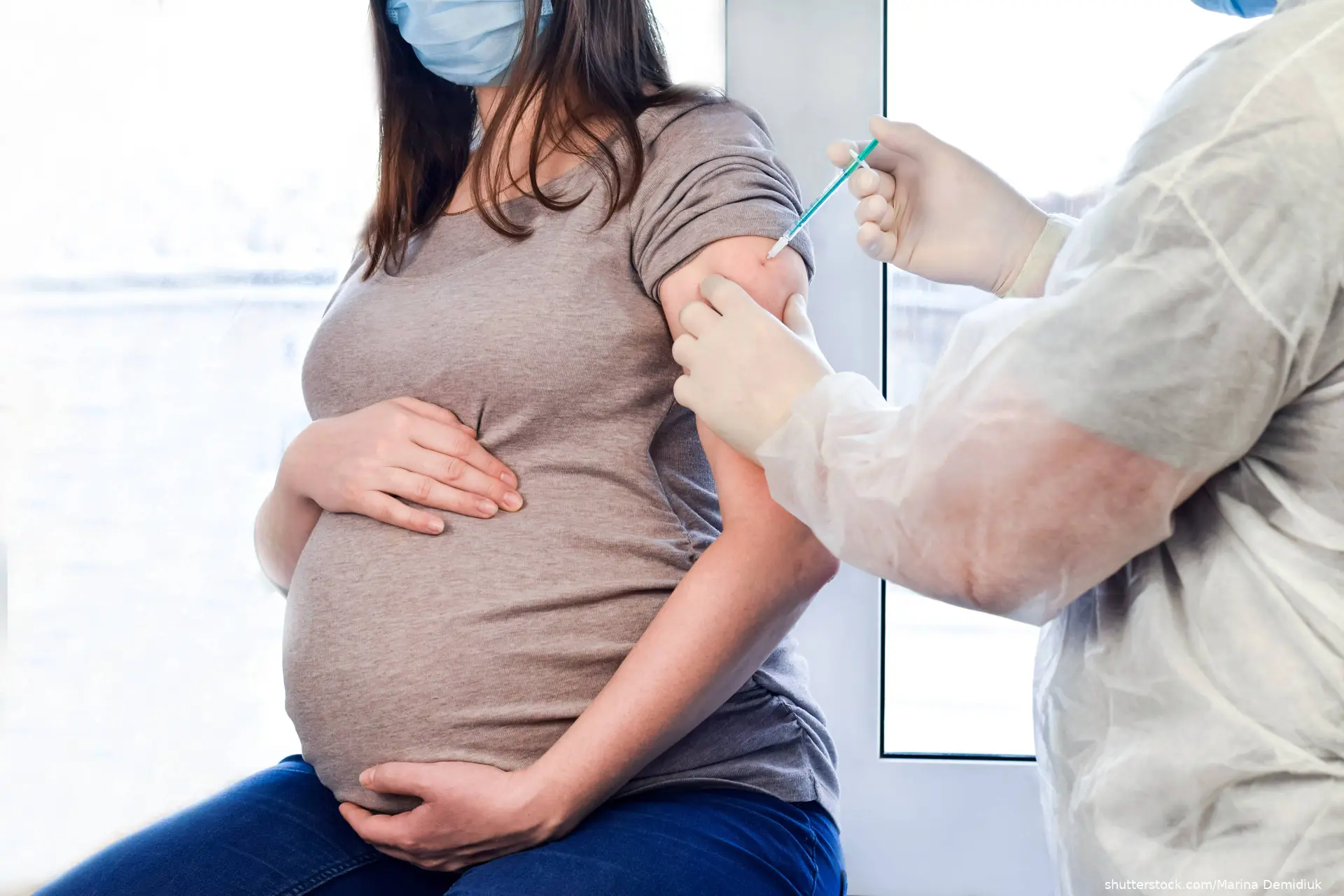
Primary and first-booster mRNA COVID-19 vaccination during pregnancy were associated with a lower risk of COVID-19–related hospitalization, while protection against infection was more modest and varied across databases, according to a target trial emulation using health data from the UK, Sweden, Spain, and Norway published in Nature Communications.
The investigators noted that real-world evidence on vaccine effectiveness (VE) during pregnancy remains limited. Using 4 routinely collected health care databases, they emulated 2 target trials of BNT162b2 (Pfizer-BioNTech) and mRNA-1273 (Moderna): one compared starting a 2-dose primary series with remaining unvaccinated, and the other compared a first booster (third dose) with no booster after primary vaccination.
Each week, vaccinated pregnant women were matched 1:1 with comparable unexposed pregnant women: 62,061 vaccinated women in the primary-series trial and 41,096 in the booster trial. VE was assessed from 15 days after vaccination. In meta-analyses, primary vaccination had a VE of 55.6% (95% CI, 44.1%-64.8%) against COVID-19–related hospitalization and 26.2% against infection; database-specific VE against infection ranged from 17.4% to 68.5%.
For the first booster, VE was 34.1% against hospitalization, but the 95% CI (0.6%-56.4%) was wide, with a lower bound near no effect; VE against infection was 33.6%, with a CI that included no difference. Hospitalization data were unavailable in the UK database, and ICU admissions were too rare to analyze. Including hospitalizations within 3 days of delivery lowered VE against hospitalization to 28.2% for primary vaccination and 19.5% for boosters.
The investigators said the pooled results should be interpreted cautiously given heterogeneity across databases. Follow-up began at the first dose (median, 42 to 55 days in the primary-series trial), and because many women were censored for not receiving a timely second dose, the investigators said primary-series estimates partly reflect the effect of a first dose. They also noted that residual confounding cannot be ruled out and that a protective effect seen in the first 14 days after the first dose might stem from behavior changes around vaccination.
Source: Mercadé-Besora N, Raventós B, Trinh NTH, et al. Target trial emulation of effectiveness of COVID-19 mRNA vaccination during pregnancy in four European countries. Nat Commun. Published online October 16, 2026. doi:10.1038/s41467-026-78469-x
Advertisement
Today's Joke
Cartoon Slide Show
Quiz

Medical Trivia 10/30/2026
1 questions · ≈ 1 min
to compete in the ranking.
×
Loading