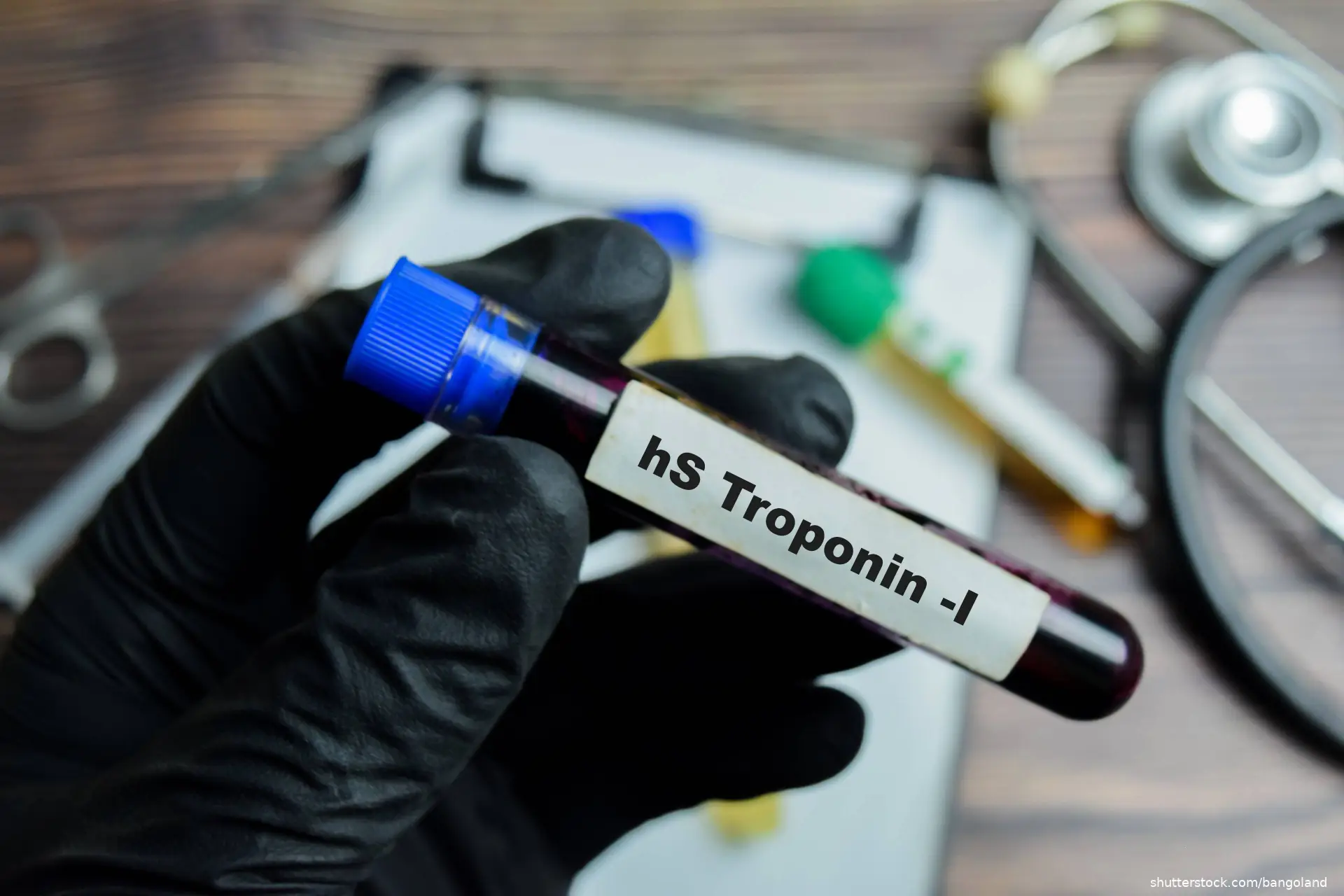
Replacing central laboratory troponin testing with a point-of-care (POC) high-sensitivity cardiac troponin I (hs-cTnI) assay reduced emergency department (ED) length of stay in patients with possible myocardial infarction (MI), with no increase in 30-day MI or cardiac death, according to results of the ICare-FASTER trial published in Circulation.
ICare-FASTER was a pragmatic, stepped-wedge cluster-randomized trial at 6 New Zealand hospitals, ranging from a small regional hospital to a large tertiary hospital. All sites already used accelerated diagnostic pathways (ADPs) with a single-sample rule-out step and a central laboratory hs-cTn assay. In the intervention arm, the whole-blood Atellica VTLi hs-cTnI assay (Siemens Healthineers), which has an analytical turnaround time of 8 minutes, replaced laboratory assays as the default test, with no other changes to the ADPs. Nurses performed the testing as part of their usual clinical activities.
The trial included 59,980 ED presentations among 44,747 adults (mean age, 61 years; 49.5% female) from February 2023 through January 2025. After adjustment for covariates, the intervention reduced length of stay by 13% (95% CI, 9%-16%), corresponding to 47 minutes from a control-arm mean of 376 minutes. Length of stay was reduced by 7% to 15% across secondary analyses, and the odds of discharge increased within each 1- to 6-hour window.
Among patients discharged from the ED, the 30-day rate of MI or cardiac death was 0.39% in both arms. About three-quarters of intervention-arm presentations were evaluated using the POC assay, and 8.6% of POC tests did not yield valid results. The reduction in length of stay was smaller for Asian and Māori patients than for European patients, which the investigators said may partly reflect variation in POC use across sites.
The authors noted that the study was conducted in a single country with 1 POC assay, that 30-day MI events were identified by coding rather than adjudication, and that the findings may not apply to EDs using other pathways, such as European Society of Cardiology algorithms. According to the paper, Siemens Healthineers supplied the analyzers and assay materials and funded contract support personnel, but it had no role in protocol development, data collection, analysis, or manuscript writing.
Source: Than M, Pickering JW, Joyce LR, et al. ICare-FASTER (Improving Care by Faster Risk Stratification Through Use of High-Sensitivity Point-of-Care Troponin in Patients Presenting With Possible Acute Coronary Syndrome in the Emergency Department): a stepped-wedge cluster-randomized trial. Circulation. Published online October 19, 2026. doi:10.1161/CIRCULATIONAHA.126.080866

Advertisement
Today's Joke
Cartoon Slide Show


Quiz

Medical Trivia 10/30/2026
1 questions · ≈ 1 min
to compete in the ranking.
×
Loading