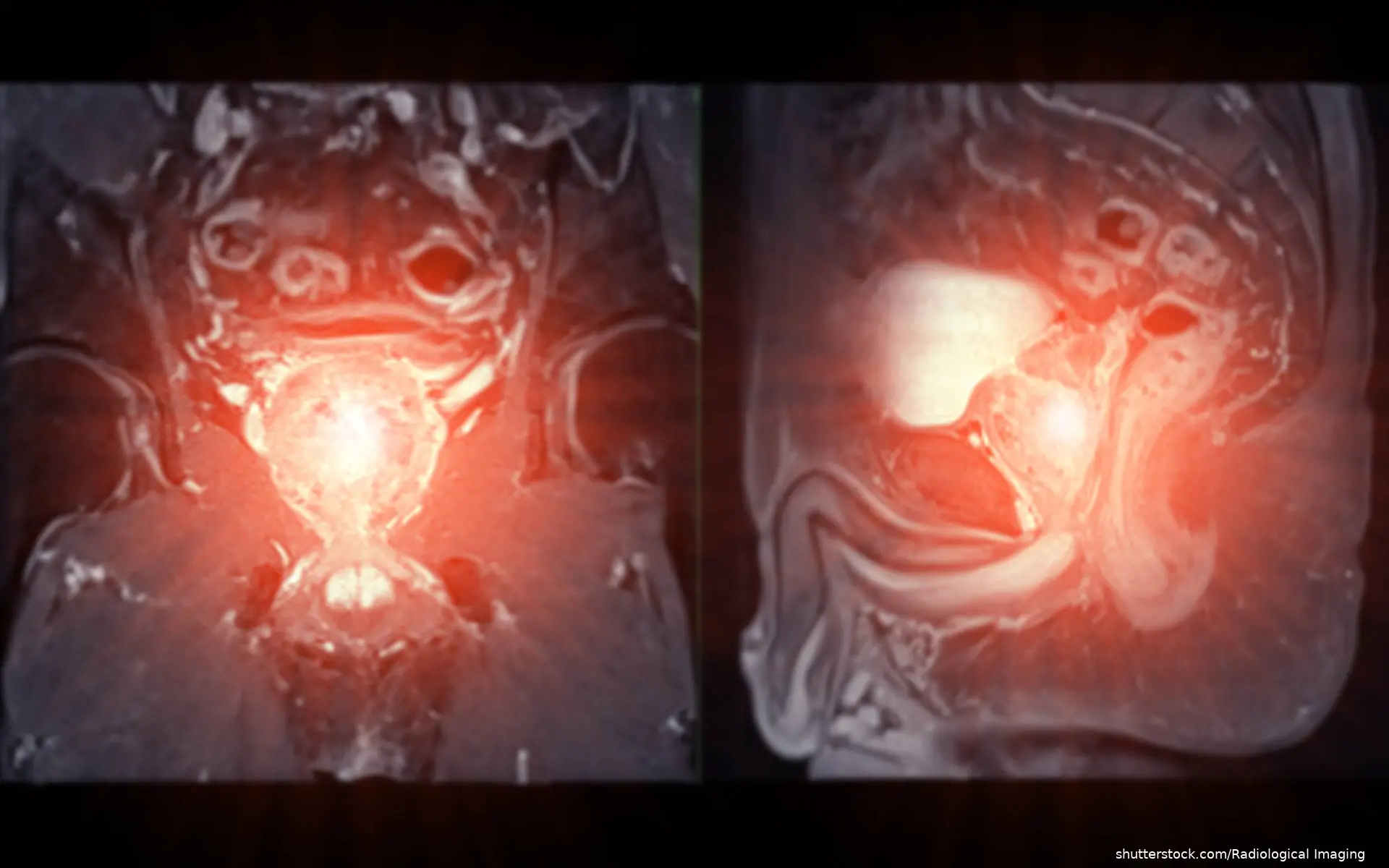
A strategy that sorts patients with Prostate Imaging Reporting and Data System (PI-RADS) 3 lesions by biopsy history and lesion location before applying a risk model would have deferred immediate biopsy in 44.6% of men in a training cohort while missing 7.6% of clinically significant prostate cancers (csPCa), according to a retrospective, single-center study published in BMC Urology.
The investigators noted that optimal management of PI-RADS 3 lesions remains a clinical dilemma because of their intermediate risk profile.
The study included 919 men in China with PI-RADS 3 lesions on multiparametric MRI who underwent systematic transrectal ultrasound-guided biopsy between January 2022 and June 2025; 684 formed a training cohort and 235 a validation cohort. csPCa, defined as International Society of Urological Pathology grade group 2 or higher, was diagnosed in 152 men (16.5%). In the training cohort, csPCa was detected in 18.5% of biopsy-naive patients vs 6.8% of those with a prior negative biopsy and, among biopsy-naive patients, in 30.6% of those with peripheral zone (PZ) lesions vs 11.9% of those without. Under the proposed pathway, biopsy-naive patients with PZ lesions would be classified as biopsy-suggested, while those without PZ lesions would be assessed with a risk calculator at a 10% threshold probability. In that subgroup, age, free-to-total prostate-specific antigen (PSA) ratio, and PSA density were independent predictors of csPCa, and the model combining them had an area under the curve (AUC) of 0.839 (95% CI, 0.775-0.903) in the training cohort.
In the validation cohort, the model had an AUC of 0.746 (95% CI, 0.601-0.891), and the overall strategy would have deferred biopsy in 43.8% of patients while missing 14.7% of csPCa cases. The stratified model did not significantly improve discrimination over a unified model that included biopsy history and lesion location as covariates, the authors reported.
The investigators noted that the results came from a retrospective simulation in a fully biopsied cohort and represent theoretical potential, and that prospective studies with real biopsy deferral and external multicenter validation are needed before widespread clinical implementation. Other limitations included the use of systematic rather than MRI-targeted fusion biopsy, small numbers in some subgroups, and the exploratory nature of the stratification scheme.
Source: Chen H, Zhu B, Li J, et al. Development and validation of a pre-stratified strategy for predicting clinically significant prostate cancer in PI-RADS 3 lesions. BMC Urol. Published online October 28, 2026. doi:10.1186/s12894-026-02364-2
Advertisement
Today's Joke
Cartoon Slide Show


Quiz

Medical Trivia 10/30/2026
1 questions · ≈ 1 min
to compete in the ranking.
×
Loading