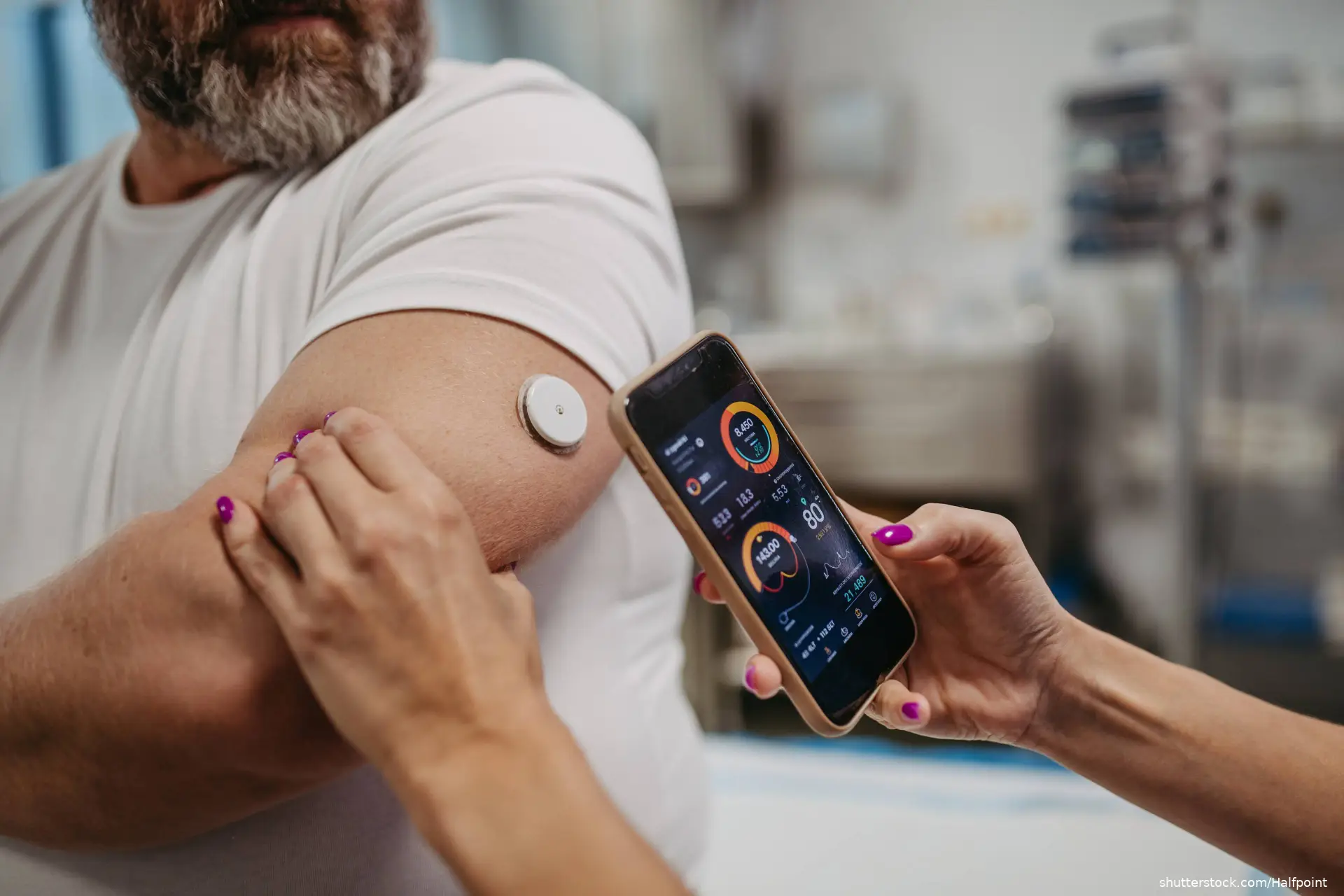
Continuous glucose monitoring (CGM) produced a greater reduction in glycated hemoglobin (HbA1c) than routine care among adults with type 2 diabetes not treated with insulin and managed in primary care, according to results of the CONNECT trial published in NEJM.
The investigators noted that CGM has been shown to benefit people with type 1 diabetes and those with insulin-treated type 2 diabetes, but that its role in type 2 diabetes not treated with insulin needed further study. The 26-week trial (NCT06601166) randomly assigned adults at 22 primary care practices in the US to CGM (n=145) or routine care (n=138). Participants ranged in age from 21 to 84 years.
For the primary outcome, HbA1c at 26 weeks, the mean level decreased from 8.8% at baseline to 7.2% in the CGM group and from 8.7% to 8.0% in the routine-care group (adjusted mean difference, −0.9 percentage points; 95% CI, −1.1 to −0.6).
Key CGM-measured secondary outcomes were tested hierarchically. The mean percentage of time with glucose levels in the range of 70 to 180mg/dL was 21 percentage points higher with CGM than with routine care. Time below 54mg/dL (between-group difference, −0.17 percentage points) and time below 70mg/dL (between-group difference, −0.20 percentage points) both met the trial’s noninferiority criteria, and time below 70mg/dL was also lower with CGM in a superiority test. No severe hypoglycemia events were reported.
The authors concluded that among adults with non–insulin-treated type 2 diabetes managed in primary care, CGM led to a greater HbA1c reduction and a lower risk of hyperglycemia than routine care.
Source: Oser TK, Martens T, Ruedy KJ, et al. Continuous glucose monitoring in non–insulin-treated type 2 diabetes. N Engl J Med. 2026;395(17):1717-1727. doi:10.1056/NEJMoa2608571

Advertisement
Today's Joke
Cartoon Slide Show


Quiz

Medical Trivia 11/24/2026
1 questions · ≈ 1 min
to compete in the ranking.
×